
Dr. Mazin Rasool Aljabiri: Transforming Digestive Healthcare Through Innovation, Education and Clinical Excellence
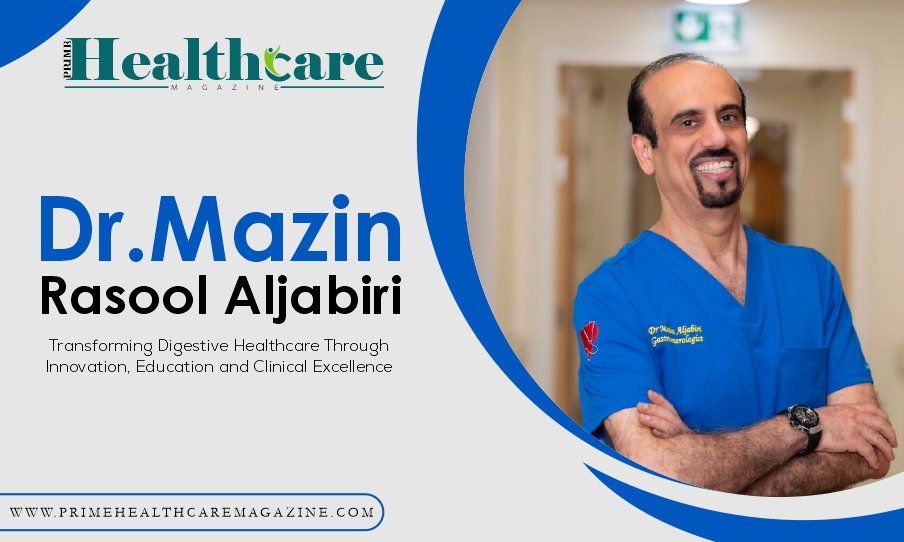
The field of gastroenterology is undergoing rapid evolution as minimally invasive, technology-driven procedures increasingly replace traditional surgical approaches. True clinical leadership lies not only in adopting innovative technologies but also in making advanced diagnostic and therapeutic procedures accessible closer to patients’ homes, reducing the need for patients to travel overseas for specialised care.
Dr. Mazin Rasool Aljabiri has been at the forefront of this transformation. An internationally recognised Consultant Physician, Gastroenterologist and Interventional Endoscopist, he leads the Gastroenterology, Hepatology and Interventional Endoscopy Services at Mediclinic Parkview Hospital, Dubai, and serves as Executive Officer of Emirates Digestive Diseases Week (EDDW). Throughout his career, he has remained committed to advancing digestive healthcare through clinical excellence, innovation, education, research and patient-centred care.
With more than two decades of experience gained in the United Kingdom and the United Arab Emirates, Dr. Mazin has played a significant role in developing advanced gastroenterology and interventional endoscopy services. He has helped introduce numerous minimally invasive techniques, including AI-assisted colonoscopy, SpyGlass™ cholangioscopy, advanced ERCP, Endoscopic Mucosal Resection (EMR), Endoscopic Submucosal Dissection (ESD), Stretta, Transoral Incisionless Fundoplication (TIF), GERD-X and Endoscopic Sleeve Gastroplasty (ESG), enabling many patients to receive highly specialised treatment within the UAE rather than travelling abroad.
Alongside his clinical practice, Dr. Mazin is actively involved in medical education, research and international collaboration. As a Fellow of the Royal College of Physicians (London), Clinical Assistant Professor, educator, researcher and internationally recognised speaker, he remains passionate about training future generations of gastroenterologists while supporting Dubai’s vision of becoming a global destination for healthcare excellence.
Prime Healthcare spoke with Dr. Mazin about his journey, the future of gastroenterology, and how innovation, education and leadership continue to shape the next generation of digestive healthcare.
Your journey has taken you from teaching hospitals in the United Kingdom to becoming one of the most respected gastroenterologists in the UAE. What inspired this transition, and how has it shaped your approach to patient care and clinical leadership?
My professional journey has been guided by a simple philosophy: to continually improve patient care through innovation, education and excellence. My years in the United Kingdom, working within the National Health Service and teaching hospitals, provided an exceptional foundation in evidence-based medicine, multidisciplinary collaboration, clinical governance, research and medical education. Those experiences taught me that outstanding healthcare is not only about technical expertise but also about teamwork, compassion, continuous learning and placing the patient at the centre of every decision.
Moving to the United Arab Emirates was both an exciting professional opportunity and a personal privilege. I was inspired by the country’s ambitious vision to become a global leader in healthcare and innovation. Under the visionary leadership of His Highness Sheikh Mohamed bin Zayed Al Nahyan, President of the UAE; His Highness Sheikh Mohammed bin Rashid Al Maktoum, Vice President, Prime Minister of the UAE and Ruler of Dubai; and His Highness Sheikh Hamdan bin Mohammed bin Rashid Al Maktoum, Crown Prince of Dubai and Deputy Prime Minister of the UAE, healthcare has evolved remarkably, creating an environment where innovation, investment and excellence are actively encouraged.
This vision has enabled clinicians like myself to introduce advanced technologies and specialised services that directly improve patient outcomes. My approach has always been to combine international best practice with compassionate, personalised care, ensuring that every patient benefits from the latest advances while feeling heard, respected and supported throughout their healthcare journey.
With more than two decades of experience and extensive expertise in advanced endoscopy, what milestones do you consider the defining moments of your professional journey?
Every stage of my career has been a valuable learning experience, but one of the defining achievements has been contributing to the development of advanced gastroenterology and interventional endoscopy services within the UAE.
Working alongside an exceptional multidisciplinary team, and with the continuous support of Mediclinic Parkview Hospital and the Mediclinic Corporate Office, we have developed a highly specialised tertiary referral service for complex gastrointestinal, hepatology and pancreatobiliary diseases.
Together, we have introduced a wide range of advanced therapeutic endoscopic procedures, including complex ERCP, SpyGlass™ cholangioscopy, Endoscopic Mucosal Resection (EMR), Endoscopic Submucosal Dissection (ESD), Stretta therapy, Transoral Incisionless Fundoplication (TIF), GERD-X, capsule endoscopy, comprehensive reflux physiology services and Endoscopic Sleeve Gastroplasty (ESG). These minimally invasive procedures have significantly expanded the treatments available within the UAE while reducing the need for patients to travel overseas for specialised care.
One milestone that I am particularly proud of is leading the implementation of one of the first Artificial Intelligence-assisted colonoscopy programmes within the Mediclinic network in the UAE. AI has enhanced adenoma detection, improved the quality of colorectal cancer screening and contributed to earlier diagnosis and better patient outcomes.
Introducing SpyGlass™ cholangioscopy was another important milestone. Previously, many patients with complex biliary disease required referral abroad for definitive treatment. Today, these highly specialised procedures can be performed locally, allowing patients to receive world-class care closer to home.
Seeing Mediclinic Parkview Hospital evolve into a recognised tertiary referral centre for complex gastrointestinal disease has been one of the most rewarding aspects of my career.
While leading the Gastroenterology, Hepatology and Interventional Endoscopy Services at Mediclinic Parkview Hospital, how do you balance clinical excellence, service development and mentoring the next generation of specialists?
Leadership in healthcare is about creating an environment where everyone is empowered to succeed. Clinical excellence begins with assembling a dedicated multidisciplinary team, fostering collaboration and promoting continuous professional development.
I believe leadership is about serving others rather than directing them. One of the greatest privileges of my career has been mentoring junior doctors, fellows, nurses and allied healthcare professionals. Teaching not only benefits future generations of clinicians but also challenges us to continually refine our own knowledge and practice.
At Mediclinic Parkview Hospital, we have built a culture centred on quality, innovation, patient safety and lifelong learning. I encourage every member of the team to question existing practice, embrace innovation and continually strive for improvement. Ultimately, investing in people is the most sustainable way to improve patient outcomes.
Early detection remains one of the most effective weapons against bowel cancer. What more can healthcare providers, governments and communities do to improve awareness and encourage timely screening?
Colorectal cancer is one of the most preventable cancers when detected early, yet many patients continue to present with advanced disease because opportunities for screening have been missed.
Healthcare providers must continue educating patients about the importance of screening and encourage participation in evidence-based colorectal cancer screening programmes. Governments also play a vital role by expanding access to screening services and increasing public awareness through national campaigns.
Technology is transforming this landscape. Artificial Intelligence-assisted colonoscopy is enhancing adenoma detection by helping identify subtle precancerous lesions that might otherwise be overlooked. These advances complement clinical expertise and improve the overall quality of endoscopic examination.
Mediclinic Parkview Hospital was among the first hospitals in the UAE to introduce AI-assisted colonoscopy into routine clinical practice, establishing one of the region’s earliest AI-supported colorectal cancer screening programmes. This has strengthened our commitment to early cancer detection, improved quality standards and enhanced patient outcomes.
Ultimately, however, technology alone is not enough. Success depends on educating communities, removing barriers to screening and encouraging individuals to seek assessment before symptoms develop. Early detection continues to save lives.
You have developed significant expertise in complex ERCP, SpyGlass™ cholangioscopy, EMR and ESD following specialised training in Japan. How have these advanced endoscopic techniques transformed patient outcomes, and where do you see the field heading next?
Advanced therapeutic endoscopy has fundamentally transformed the management of gastrointestinal disease. Procedures that once required major surgery can now often be performed endoscopically, allowing patients to recover more quickly, experience fewer complications and return to normal life sooner.
SpyGlass™ cholangioscopy has revolutionised the management of complex biliary disease by allowing direct visualisation of the bile ducts, improving diagnostic accuracy and enabling targeted therapy. Similarly, EMR and ESD have transformed the treatment of early gastrointestinal cancers by offering curative endoscopic therapy while preserving organs and avoiding unnecessary surgery.
Looking ahead, I believe therapeutic endoscopy will continue to evolve through artificial intelligence, robotics, image-enhanced endoscopy and increasingly personalised approaches to patient care. These innovations have enormous potential, but our responsibility is to ensure they are introduced safely, responsibly and always with the patient’s best interests at heart.
Technology should enhance—not replace—clinical judgement. The future of gastroenterology will be defined by successfully integrating innovation with experience, sound clinical decision-making and compassionate patient care.
Inflammatory Bowel Disease and hepatology have been central areas of your clinical practice. What emerging therapies or research developments are you most excited about, and how do you see them changing patient care over the next decade?
Inflammatory Bowel Disease and hepatology are entering an exciting era of precision medicine. The emergence of highly selective biologic therapies and small molecules targeting IL-23, JAK pathways and other inflammatory mechanisms is transforming the management of Crohn’s disease and ulcerative colitis.
These therapies allow us to move beyond simply controlling symptoms towards achieving deep remission, mucosal healing and long-term disease modification. Our treatment goals are increasingly focused on improving quality of life while preventing disease progression and long-term complications.
In hepatology, advances in the management of MASLD, viral hepatitis, autoimmune liver disease, liver transplantation and non-invasive fibrosis assessment continue to transform patient care. Artificial intelligence, predictive biomarkers and precision medicine will further personalise treatment strategies, allowing earlier intervention and improved long-term outcomes.
At Mediclinic Parkview Hospital, our multidisciplinary IBD and hepatology services continue to evolve, ensuring patients receive comprehensive, evidence-based care supported by the latest therapeutic advances.
Having worked within both the UK’s NHS and the UAE’s healthcare ecosystem, what key lessons from each system have influenced your philosophy as a physician and healthcare leader?
The NHS taught me the importance of robust clinical governance, evidence-based practice, multidisciplinary collaboration and continuous clinical audit. It instilled a culture of accountability, structured education and lifelong learning that continues to shape my practice today.
The UAE has demonstrated how visionary leadership, strategic investment and the rapid adoption of innovation can transform healthcare delivery within a relatively short period. The willingness to embrace advanced technologies and develop specialised referral services has created exceptional opportunities to improve patient care across the region.
Combining these experiences has shaped my philosophy: maintaining the highest international clinical standards while embracing innovation, agility and patient-centred care. I believe that sustainable progress in healthcare comes from combining scientific excellence with compassion, teamwork and a commitment to continuous improvement.
Medicine continues to evolve through artificial intelligence, precision diagnostics, robotics and digital health. Which innovations do you believe will have the greatest impact on gastroenterology over the next five years?
Artificial intelligence will undoubtedly be one of the most significant developments in gastroenterology. AI-assisted colonoscopy is already improving adenoma detection and supporting earlier diagnosis of colorectal cancer. However, this is only the beginning.
Over the coming years, we will see major advances in optical diagnosis, computer-aided lesion characterisation, robotic-assisted endoscopy, AI-integrated capsule endoscopy, precision molecular diagnostics and increasingly personalised treatment pathways. These technologies have the potential to improve diagnostic accuracy, optimise therapeutic decision-making and further enhance patient safety.
Technology should never replace clinical judgement; rather, it should strengthen it. The future of gastroenterology will be defined by successfully integrating technological innovation with sound clinical expertise, experience and compassionate, patient-centred care.
Beyond technical expertise, patients often remember a physician for compassion and trust. How do you ensure that empathy remains at the heart of your practice while managing highly complex clinical cases?
Technical expertise is fundamental in modern medicine, but compassion and trust are what patients remember long after a consultation or procedure.
Every patient comes with unique concerns, fears and expectations. Our responsibility extends beyond making a diagnosis or performing a procedure—we must also listen carefully, communicate openly and guide patients through what is often one of the most challenging periods of their lives.
I believe communication is one of the most powerful tools a physician possesses. Taking the time to explain a diagnosis, discuss treatment options and involve patients and their families in shared decision-making builds confidence, strengthens trust and ultimately improves the doctor–patient relationship.
Many of the patients we treat undergo highly complex procedures such as ERCP, SpyGlass™ cholangioscopy, EMR, ESD and other advanced therapeutic interventions. While these procedures demand technical precision, they also require empathy, reassurance and continuity of care. Treating every patient with dignity, respect and kindness remains the cornerstone of my practice, regardless of how technically demanding the procedure may be.
You have contributed to research, presented at international conferences and remained actively engaged in academic medicine. How important is continuous learning in maintaining excellence as a specialist?
Medicine evolves every day, and continuous learning is not optional—it is a professional responsibility. New evidence, emerging technologies and evolving treatment strategies continually reshape clinical practice, making lifelong education essential for every clinician.
As Executive Officer of Emirates Digestive Diseases Week (EDDW), one of my priorities has been to introduce a new educational initiative each year. This year, we launched three major programmes: a dedicated endoscopy nursing platform, point-of-care gastrointestinal ultrasound training for gastroenterologists, and the Middle East’s first live endoscopy collaboration with Endoscopy on Air from Milan. These initiatives reflect our commitment to continuous education, international collaboration and advancing clinical practice throughout the region.
Throughout my career, I have remained actively involved in research, international conferences, live endoscopy workshops and medical education. These activities allow me not only to remain current with advances in gastroenterology but also to exchange ideas with colleagues around the world and contribute to the continued development of our specialty.
Teaching is equally important to me. Whether mentoring medical students, specialist trainees or experienced colleagues, education creates a culture of excellence that ultimately benefits our patients. Sharing knowledge, encouraging critical thinking and fostering innovation ensure that future generations continue to advance our specialty beyond what we have achieved today.
I am deeply grateful for the continued encouragement and support of Mediclinic Parkview Hospital and the Mediclinic Corporate Office, whose commitment to innovation, education and investment in advanced technologies has enabled us to develop highly specialised services and continue advancing gastroenterology within the UAE.
Complex liver disease management and caring for transplant patients require multidisciplinary collaboration. What leadership qualities are essential for building high-performing clinical teams in such demanding environments?
Managing complex liver disease and transplant patients highlights the importance of teamwork in modern healthcare. The best outcomes are achieved when hepatologists, gastroenterologists, surgeons, radiologists, pathologists, specialist nurses, dietitians and many other healthcare professionals work together with a shared commitment to delivering the highest standards of patient care.
As a leader, I believe in creating an environment built on trust, mutual respect and accountability. Every member of the multidisciplinary team should feel valued, supported and empowered to contribute their expertise. Leadership is not about hierarchy—it is about bringing people together around a shared purpose and enabling them to perform at their very best.
Equally important is investing in education, mentoring and professional development. By encouraging continuous learning and supporting colleagues in developing their skills, we strengthen the entire team, foster future leaders and ultimately improve patient outcomes.
Throughout your career, what has been the most challenging medical case or professional experience that significantly influenced your perspective as a gastroenterologist?
It is difficult to identify a single case because every complex patient teaches us something valuable. Some of the most challenging situations involve advanced pancreaticobiliary disease, complex biliary strictures, early gastrointestinal cancers and severe inflammatory bowel disease, where clinical judgement, technical expertise and multidisciplinary collaboration are all essential.
Professionally, one of the most rewarding challenges has been helping establish advanced interventional endoscopy services within the UAE. Introducing procedures such as advanced ERCP, SpyGlass™ cholangioscopy, EMR, ESD, Stretta, TIF, GERD-X and other advanced therapeutic techniques required careful planning, specialised training and close collaboration across multiple disciplines. Today, many patients who previously travelled overseas can receive highly specialised treatment closer to home.
One case that has remained with me involved a patient who presented with persistently abnormal cholestatic liver function tests despite completely normal CT, MRI/MRCP and ultrasound imaging. During SpyGlass™ cholangioscopy, we identified a subtle 2 mm lesion within the distal common bile duct that had not been detected on conventional imaging.
Targeted biopsies confirmed an early cholangiocarcinoma. The patient subsequently underwent curative surgery and, nine years later, remains well and cancer-free. Cases like this remind us that innovation is not simply about adopting new technology—it is about giving patients opportunities that may genuinely save or transform lives.
Receiving recognition for your contributions to gastroenterology reflects years of dedication to advancing digestive healthcare. What does this recognition mean to you personally, and how does it inspire your future goals?
Being recognised as one of “Gastroenterology’s Most Influential Leaders and Changemakers of 2026” is both a tremendous honour and a humbling experience. I view this recognition not as an individual achievement but as a reflection of the outstanding colleagues, mentors and multidisciplinary teams with whom I have had the privilege to work throughout my career.
I would like to express my sincere gratitude to the visionary leadership of the United Arab Emirates. Under the guidance of His Highness Sheikh Mohamed bin Zayed Al Nahyan, President of the UAE; His Highness Sheikh Mohammed bin Rashid Al Maktoum, Vice President, Prime Minister of the UAE and Ruler of Dubai; and His Highness Sheikh Hamdan bin Mohammed bin Rashid Al Maktoum, Crown Prince of Dubai and Deputy Prime Minister of the UAE, the country has become an international leader in healthcare innovation, education and clinical excellence.
Their vision has created an environment where healthcare professionals are empowered to innovate, collaborate and continually improve patient care.
I am equally grateful to the management of Mediclinic Parkview Hospital and the Mediclinic Corporate Office for their confidence, encouragement and continued support in developing advanced gastroenterology and interventional endoscopy services. Their commitment to innovation and investment in advanced technologies has enabled us to expand specialised services and deliver increasingly complex care within the UAE.
This recognition motivates me to continue contributing to research, education, innovation and physician training while helping strengthen specialised digestive healthcare across the UAE and the wider region.
As someone helping shape the future of gastroenterology in the Middle East, what priorities should healthcare institutions focus on to enhance digestive disease prevention, early diagnosis and patient outcomes across the region?
Healthcare systems must continue investing in prevention, early diagnosis, education and innovation. Expanding colorectal cancer screening programmes, increasing public awareness and ensuring timely access to specialist services remain essential if we are to reduce the burden of digestive diseases across the region.
Equally important is the continued development of highly specialised referral centres that combine excellence in clinical care with education, research and physician training. These centres help standardise best practice, improve clinical outcomes and ensure patients have access to advanced treatments within their own countries.
Looking ahead, I am particularly excited about the continued development of Mediclinic’s Centre of Excellence Network, where four major hospitals will work collaboratively within a unified model of excellence in gastroenterology and advanced endoscopy. To the best of my knowledge, this represents the first integrated gastroenterology network of its kind within Mediclinic globally and reflects the UAE’s continued commitment to delivering world-class specialist healthcare.
At Mediclinic Parkview Hospital, we have been privileged to introduce advanced interventional endoscopy services including AI-assisted colonoscopy, advanced ERCP, SpyGlass™ cholangioscopy, EMR, ESD, Stretta, TIF and GERD-X. These innovations have helped establish the hospital as a recognised tertiary referral centre, allowing many patients who previously travelled abroad to receive world-class care within Dubai.
This also supports Dubai’s growing reputation as an international destination for specialised healthcare and medical tourism, attracting patients from across the Middle East, Africa and beyond while contributing to the UAE’s vision of becoming a global leader in healthcare excellence.
Being recognised as one of “Gastroenterology’s Most Influential Leaders and Changemakers of 2026”, what legacy do you hope to leave for your patients, your colleagues and the next generation of gastroenterologists?
The greatest legacy any physician can leave is not measured by awards or titles, but by the positive impact made on patients’ lives and on the people we inspire throughout our careers.
I hope to be remembered as a physician who combined clinical excellence with compassion, innovation with integrity and leadership with humility. Beyond treating patients, I hope to contribute to developing future generations of gastroenterologists who embrace lifelong learning, ethical practice and a commitment to advancing patient care through research and innovation.
One of my aspirations has always been to help establish the UAE as a regional leader in advanced gastroenterology, hepatology and interventional endoscopy through education, research and the development of specialised clinical services. If future specialists are able to build upon these foundations, introduce new innovations and continue improving patient care,
I will consider that my greatest professional achievement.
Ultimately, my greatest aspiration is not simply to perform complex procedures but to inspire future generations of physicians to innovate, teach, lead with compassion and continually raise the standards of patient care. If, through our collective efforts, we help position the UAE among the world’s leading centres for gastroenterology and interventional endoscopy while improving the lives of thousands of patients, that will be the most meaningful legacy I could hope to leave.
Read Also : The Precision Path: How Dato’ Dr. Suresh Ramasamy Redefines Spinal Surgery