
The Techno-Commercial Visionary – Chetan Shah’s Formula for Affordable Healthcare
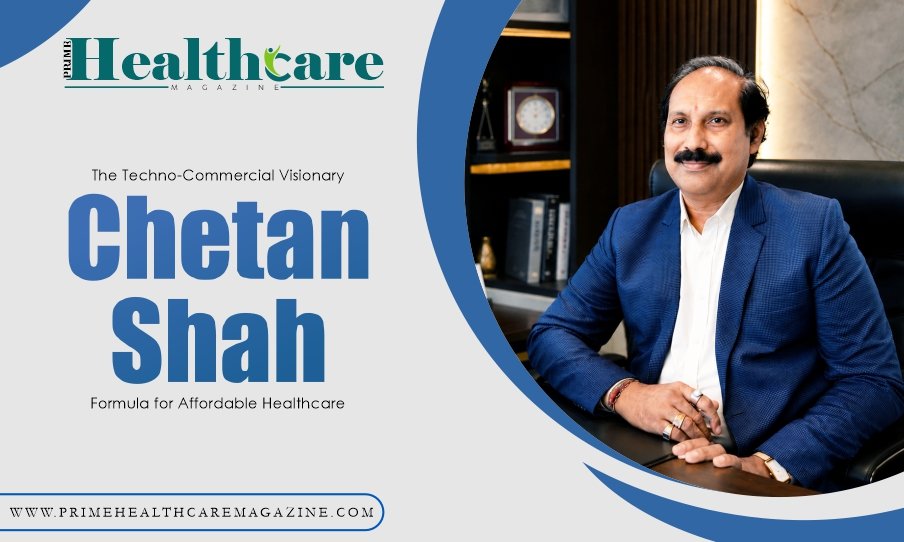
Syncing industrial design with modern medicine is the need of the hour in a constantly evolving global pharmaceutical landscape. Also, it must be ensured that lifesaving treatments reach diverse markets on time. And for that, a balance of engineering precision, smart supply chain management, and regulatory discipline is required. In that sense, Chetan Shah, who is driving such an industrial transformation as Senores Pharmaceuticals’ Whole Time Director and Chief Operating Officer(COO), has already established his leadership in driving commercial excellence in 2026.
Through the lens of industrial efficiency, he views global healthcare operations. It enables him to connect advanced manufacturing processes with smart strategic planning. Bridging foundational industrial science with complex global operations is his career. This vast experience and repertoire of knowledge and deep expertise have made him a leader with critical influence in the modern pharma production arena.
Mastering Complex Global Networks
His professional journey began immediately after he completed his graduation, a post-graduation in industrial engineering, and various specialized diplomas in human resources, labor laws, and management. He built his initial operational foundation during five years of intense technical work with GMM Pfaudler, Ingersoll Rand India, and Cadmach. Because Cadmach manufactures specialized pharmaceutical machinery, this early phase gave him deep technical exposure to pharmaceutical equipment fabrication. He gained critical operational insights into the precise engineering systems used for tablet manufacturing and various other liquid and solid medical formulations.
This unique machine manufacturing background opened up major corporate opportunities within the health sector. Because Cadmach operated as a Cadila group company in those days, he stepped into Cadila Pharmaceuticals during its crucial establishment phase. He quickly took on a major lead role, coordinating overall supply chain functions, managing manufacturing workflows, and heading critical cost reduction and efficiency improvement projects. His focus on timely delivery supported the growth of the organization, and he successfully managed the complex integration of supply chain assets during high-stakes mergers and acquisitions.
Following his successful tenure at Cadila, he stepped into Torrent Pharmaceuticals as the global supply chain head, where he oversaw Demand planning / Production / Inventory planning, and massive distribution logistics across multiple international territories. His career also includes strategic operational experience outside healthcare, having worked with major consumer and technology entities, including Reliance Retail Limited as supply chain Head, Reliance Fresh Limited, and Reliance Corporate IT Park Limited. This diverse background arms him with unique insights into retail logistics, large-scale procurement, and corporate IT infrastructure, which he now infuses into the pharmaceutical landscape.
Orchestrating Operations for Global Scaling
Today, he applies his 30+ years of extensive industrial experience to guide the overall operations of the present company as a core member of the executive management team. He takes direct corporate responsibility for the company’s management information systems, advanced manufacturing processes, and global supply chain logistics. He also shapes the company’s future by managing strategic planning, corporate risk management, policy enforcement, and capital expenditure planning. Chetan stands on the clean-room production balcony at the Senores facility, reviewing a real-time management information system dashboard that displays tablet output metrics alongside updated shipping schedules, ensuring the manufacturing lines align perfectly with global distribution targets.
Applying Knowledge to Solve Industry Challenges
Chetan found his true professional calling by blending heavy machinery engineering with the vital needs of the healthcare sector. His early hands-on exposure to manufacturing specialized pharmaceutical equipment gave him a rare technical advantage.
When the opportunity arose to transition directly into the pharmaceutical industry, he jumped at the chance to apply his industrial engineering background to complex drug production setups. Successfully meeting the tough manufacturing challenges of the sector and gaining rapid professional recognition inspired him to dedicate his career to this field. This path allowed him to sharpen his technical skills while gaining deep corporate exposure across all aspects of modern business management.
Balancing Product Ratios for Maximum Returns
He defines commercial excellence in the current pharmaceutical landscape through strict cost management and optimal product distribution metrics. He points out that every medical company must maintain a sharp operational focus on the overall cost of Research and development, along with global supply chain cost including production cost, market introduction fees and overall quality of products.
He notes that many pharmaceutical corporations currently struggle with an inefficient seventy-five to twenty-five product ratio, meaning that seventy-five percent of their catalog generates only twenty-five percent of their earnings. In contrast, a small group of products carries the remaining seventy-five percent of revenues.
For Chetan, true commercial excellence occurs when an organization systematically improves this product ratio to create a more balanced and profitable portfolio. He also uses the minimization of product returns and inventory expiries as key performance indicators to measure the overall health of an enterprise.
By keeping waste to an absolute minimum and aligning production schedules with real-world market demand, he helps the company maximize its financial returns. Chetan sits with his strategic planning team in the corporate headquarters, analyzing a comprehensive cost-benefit sheet of their upcoming product line, looking for ways to streamline their global distribution framework.
Capitalizing on Modern Health Breakthroughs
Chetan identifies massive growth opportunities for pharmaceutical corporations in 2026 as global health consciousness reaches an all-time high. With obesity now widely recognized as a major medical concern alongside type two diabetes, a vast market has emerged for companies to research and introduce novel treatments.
He highlights the skyrocketing demand for GLP-1 treatments and advanced biosimilars in oncology and immunology as key drivers of industry expansion. To accelerate these scientific discoveries, he supports the integration of artificial intelligence tools within the research phase, allowing teams to analyze molecular structures in a fraction of the traditional time.
Beyond drug development alone, he sees immense strategic value in vertical integration to secure the company’s long-term supply chain. He also considers a major opportunity to expand in-house active pharmaceutical ingredient production and manufacturing specialized equipment internally (In India).
By producing their own raw materials and machinery, pharmaceutical companies can drastically reduce their dependence on third-party vendors and protect themselves against global trade disruptions. This comprehensive operational approach allows the organization to lower its production costs while maintaining total control over product quality from start to finish.
Navigating the Digital Sales Shift
He closely monitors how digital transformation radically changes the traditional pharmaceutical sales and marketing landscape. The old industry relies heavily on physical stockists and manual supply networks, but the modern market is moving rapidly toward online sales channels and virtual platforms.
This shift matches the rising consumer trend of virtual consultations and digital prescriptions, where patients manage their healthcare needs directly through online pharmacies. These digital storefronts market a wide variety of medical products, utilizing advanced algorithms to offer better consumer discounts and maximize distribution efficiency.
He adapts the company’s commercial strategy to leverage this increasing prevalence of branded generic products in the marketplace. Instead of relying solely on traditional medical representatives, the industry now promotes these products through social media networks and integrated online platforms to reach a broader audience.
Managing Global Supply Strain
Chetan actively addresses the intense pressures that current geopolitical disturbances place on global pharmaceutical supply chains. These international conflicts and trade disruptions create massive challenges regarding raw material availability and overall transportation costs. Furthermore, rising global demand and fierce competition from various regions around the world require companies to navigate a complex web of different regulatory compliance standards. Dealing with these volatile external forces requires working with a fixed set of organizational resources, making traditional operational models completely insufficient.
To overcome these steep global challenges, he implements a rigorous system of continuous planning that balances long-term strategic goals with short-term operational tactics. He also monitors the demand fluctuations and regulatory updates on a weekly basis, maintaining a highly dynamic approach to corporate operations. By keeping the organization in a constant state of readiness for change management.
Aligning Teams Through Open Communication
He keeps his corporate workforce deeply motivated and aligned with the overarching business goals through direct and frequent interaction with all functional leaders. He conducts regular briefing sessions to keep department heads thoroughly apprised of the company’s yearly, quarterly, monthly, and weekly performance targets. Instead of micromanaging from a distance, he works closely with his team to solve operational problems quickly, empowering individual leaders to make critical decisions on the factory floor and in the logistics offices.
He firmly backs his team members up when initiatives face setbacks, actively motivating them to treat failure as a data-driven learning tool while counseling them to walk a continuous path of professional improvement. He makes it a point to recognize and warmly appreciate team members for their specific operational achievements, while also helping them maintain a healthy balance between their social and professional lives.
By building this supportive workplace culture, he prepares his team to execute quick but highly successful organizational pivots with the highest level of accuracy. Chetan walks through the main administrative hub, discussing an updated regulatory compliance framework with the quality assurance team, checking the timeline for an upcoming overseas facility audit.
Maximizing Returns Through Exclusivity
Chetan views continuous innovation as a major driver of commercial performance within the global medical market. He explains that as standard pharmaceutical products mature over time, they naturally experience sharp price erosion due to decreasing market demand, heavy competition, and rapid replacement by newer therapies.
In contrast, investing heavily in innovation creates a vital opportunity for a corporation to achieve product exclusivity in international markets. This temporary monopoly eliminates intense marketplace competition, resulting in significantly higher financial realization and superior commercial performance for the enterprise.
Guiding the Next Generation of Experts
He offers clear, practical advice to young professionals who aspire to build a successful career within the highly technical pharmaceutical industry. He encourages them to maintain a highly focused approach, acquiring deep knowledge of the chemical structures of active pharmaceutical ingredients while simultaneously learning about modern manufacturing machinery and technologies. He advises them to keep updated with the latest industry trends and to sharpen their techno-commercial skills through a mindset of continuous learning. Furthermore, he emphasizes that mastering human resources techniques and leadership styles is essential for fast corporate career growth.
He stresses that honesty, personal integrity, and total dedication form the absolute bedrock of a meaningful professional path. He urges young scientists and managers to maintain the courage and confidence required to face operational problems and unexpected failures, using these difficult experiences to learn and move ahead positively. He reminds them of a classic piece of wisdom that guides his own daily decision-making, noting that when the going gets tough, the tough get going.
Shaping the Future of Global Healthcare
His long-term vision for the pharmaceutical industry directly addresses how modern diseases are becoming far more complicated, requiring highly specialized treatments and doctors. He points out that global warming, changing dietary habits, rising social pressures, and long working hours now result in chronic health conditions at a very young age across a large segment of the population. This shifting environment generates an unprecedented demand for advanced healthcare solutions and innovative pharmaceutical manufacturing. He believes the sector must develop next-generation wonder drugs and vaccines to curb future pandemics, treat complex heart and brain diseases, and manage various types of cancer and immunological disorders.
To meet these massive public health needs, he advocates for increased investment in artificial intelligence-driven research, advanced molecular formulations, and rigorous clinical data that create long-lasting positive effects for human lives. At the same time, he pushes the industry to enhance its technological advancements so that manufacturing plants can produce these vital treatments on a massive scale at highly affordable prices.
He knows that the future of global pharma is holistic, affordable, and truly progressive.
Read Also : The Light-Driven Mind of a Technovator: How Dr. Ko-Cheng Fang Is Shaping the Future of Healthtech