
STED Microscope Inflammatory Bowel Disease Research Gets Boost
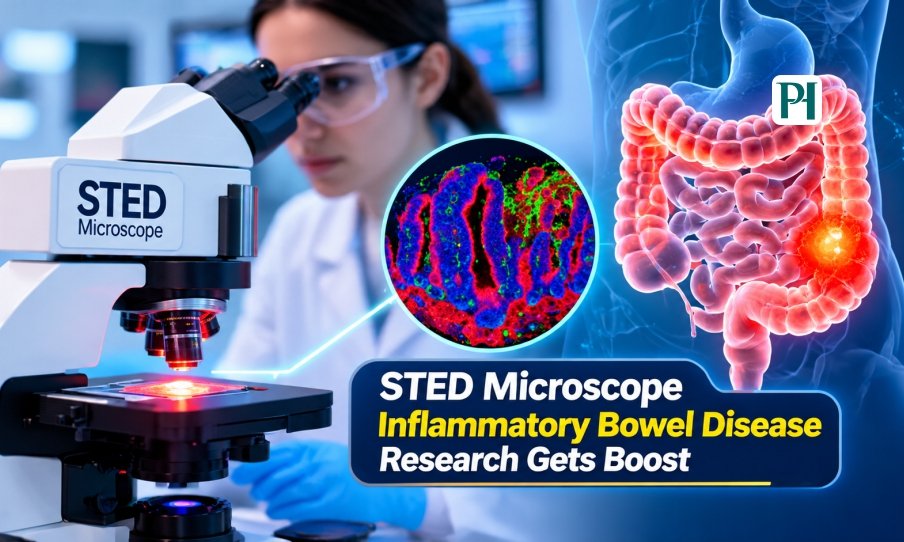
A new STED microscope inflammatory bowel disease research programme is giving scientists a closer view of the molecular structures involved in gut damage. The system can reach around 20-nanometre resolution, about ten times the resolution of conventional light microscopy, allowing researchers to examine structures that are otherwise difficult to resolve.
The microscope is housed at the Harwell Science and Innovation Campus in Oxfordshire and is being used by scientists at the Rosalind Franklin Institute to study how inflammatory bowel disease affects the gut barrier. The STED microscope inflammatory bowel disease work focuses on the junctions between intestinal cells.
The system includes image-correcting mirrors and a temperature-controlled stage, allowing researchers to examine living cells and mini-organs under conditions closer to normal body temperature. Dr Karina Pombo-Garcia leads the research team investigating these nanoscale changes.
The inflammatory bowel disease research programme will use thicker human samples and patient-derived intestinal organoids. Scientists plan to compare healthy samples with those derived from people with IBD to identify molecular changes that occur early in barrier failure.
The new STED microscope inflammatory bowel disease approach could help researchers connect changes in individual proteins with the wider breakdown of the gut barrier. This may provide information that is difficult to obtain using conventional imaging methods.
IBD includes Crohn’s disease and ulcerative colitis, its two main forms. More than half a million people in the UK live with some form of the condition.
The research could also contribute to the search for more targeted IBD treatment. Identifying the molecular processes involved in barrier damage may help researchers investigate potential therapeutic targets and whether treatment can restore normal organisation.
The next phase of the inflammatory bowel disease research will involve comparing healthy and IBD-derived samples through high-resolution imaging. Researchers will look for molecular patterns that could explain where and how the gut barrier begins to fail.
The work is supported by a five-year £67.7 million investment from the Engineering and Physical Sciences Research Council into the Rosalind Franklin Institute. The Henry Royce Institute will receive another £90 million over the same period for materials research.