
How Digital Twins in Healthcare Are Transforming Patient Care and Treatment Plans 
Computers getting smarter has changed medicine in ways few saw coming. From machines built to mimic rockets and planes, copies inside computers now stand in for people. These digital versions of patients help doctors try things out before touching skin. Instead of guessing, teams watch what happens in the simulation first. Precision jumps when a person’s health exists as moving data. Artificial minds sort through patterns once too tangled to untangle. A heartbeat, a breath, a disease – each lives digitally, updated in real time. Decisions grow sharper because the model reacts like flesh and blood. What started far from hospitals now shapes how illness gets studied. Seeing inside without cutting open becomes normal, quiet, effective. Out here, tools are shifting how medicine works – no longer just fixing problems after they show up. Instead of waiting, care starts to fit each person like a second skin. With machines thinking harder every year, twin versions of patients live inside computers, practicing healing before real symptoms strike. These copies learn, adapt, change – mirroring bodies in motion. Medicine stretches further now, not only treating sickness but guessing it ahead of time. Long lives gain new shape when treatment stops guessing and starts knowing.
The Digital Twin of Human Life
Picture a stream of data moving nonstop from a person to an exact digital copy. Because it needs loads of varied details – like DNA maps, past health files, body chemistry snapshots, along with live updates from fitness trackers – this system grows smarter over time. What powers it? Algorithms trained to take in wild mixes of info, shaping models across scales that act nearly identical to living humans. While old charts sit unchanged, these online versions shift day by day, tracking metabolism shifts, how age alters function, even tiny cell reactions when life gets tough.
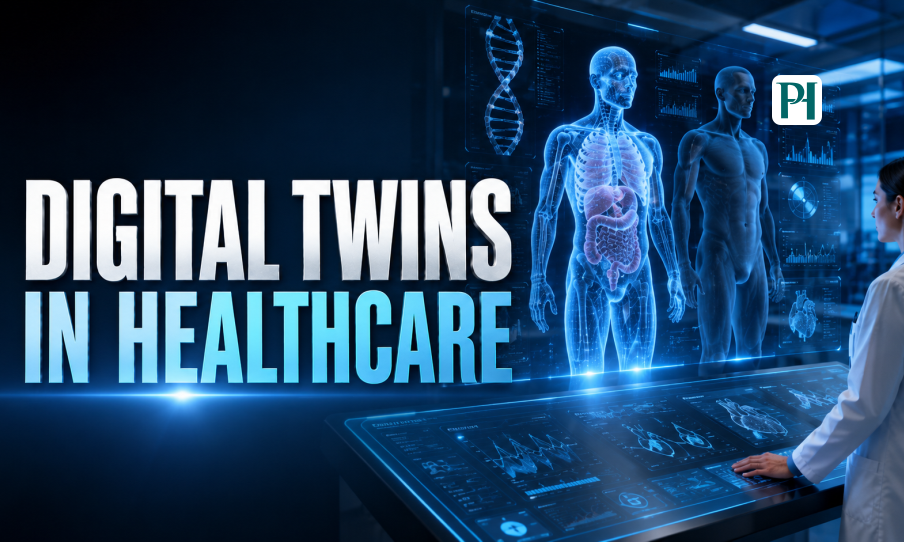
Building these intricate models requires immense collaborative efforts between data scientists, clinicians, and software engineers. The ultimate goal of deploying digital twins in healthcare is to achieve a level of granular visualization where a doctor can examine an individual organ, a vascular network, or even cellular pathways in a virtual environment. For example, a cardiologist can interact with a virtual replica of a patient’s heart, observing how blood flows through specific chambers and predicting how structural defects might progress over time. This continuous, data-driven mirroring turns abstract physiological concepts into tangible, actionable insights that can be safely manipulated in a digital space before any physical intervention occurs.
Personalizing Treatment and Predicting Outcomes
The true brilliance of this technology emerges within the realm of therapeutics and personalized pharmacology. Traditionally, pharmaceutical treatments have been developed based on clinical trials that look at broad population averages, which often leads to a process of trial and error for individual patients. However, leveraging digital twins in healthcare allows doctors to run thousands of virtual simulations to determine exactly how a specific patient will react to a precise dosage of a drug. By testing various chemical compounds on the digital replica first, oncologists can identify which chemotherapy regimen will most effectively dismantle a tumor while minimizing toxic side effects to the surrounding healthy tissue.
Beyond pharmaceutical applications, this methodology alters the landscape of surgical planning and chronic disease management. Surgeons are beginning to utilize digital twins in healthcare to practice complex procedures on a patient’s exact anatomical replica before entering the operating theater. This capability drastically reduces the likelihood of unexpected complications during surgery, lowers anesthesia times, and improves overall patient survival rates. For chronic conditions such as diabetes or cardiovascular disease, the virtual model can project how lifestyle changes, dietary shifts, or medication adjustments will impact the patient’s health months or even years into the future, providing a powerful preventive tool.
Overcoming Challenges and Looking to the Future
Despite the extraordinary promise of this technological frontier, several substantial hurdles must be cleared before widespread adoption can be fully realized. The widespread deployment of digital twins in healthcare raises critical questions regarding data privacy, cybersecurity, and patient consent. Because these virtual models require the aggregation of highly sensitive, continuous biological data, they become prime targets for sophisticated cyberattacks. Securing this interconnected ecosystem demands robust encryption frameworks and strict regulatory oversight to ensure that a patient’s digital identity remains entirely confidential and protected against unauthorized exploitation.
Furthermore, medical systems worldwide currently struggle with data silo issues, where different hospitals and laboratories use incompatible software platforms. For digital twins in healthcare to achieve global viability, the medical community must establish universal standards for data interoperability, allowing seamless communication between various diagnostics tools and the central virtual model. Additionally, clinicians must undergo extensive training to interpret these highly complex computational forecasts correctly, ensuring that human medical judgment remains the ultimate guiding force behind every automated recommendation.
As we look toward the horizon, the synergy between computational biology and clinical practice will only grow more profound. The maturation of digital twins in healthcare will likely democratize premium medical insights, making highly accurate diagnostic tools accessible to underserved populations through remote monitoring systems. Over time, these individual virtual models may be aggregated into massive, anonymous datasets, allowing researchers to simulate large-scale clinical trials and accelerate the discovery of cures for rare diseases. By bridging the gap between digital simulation and physical reality, this technology is carving out a future where healthcare is no longer just about healing the sick, but flawlessly perfecting human wellness.
Read Also: Unlocking Your Fitness Potential: The Complete Guide to BCAA Benefits