
Future of Image Guided Surgery: One of UK’s Most Promising Interventional Radiologist 2026
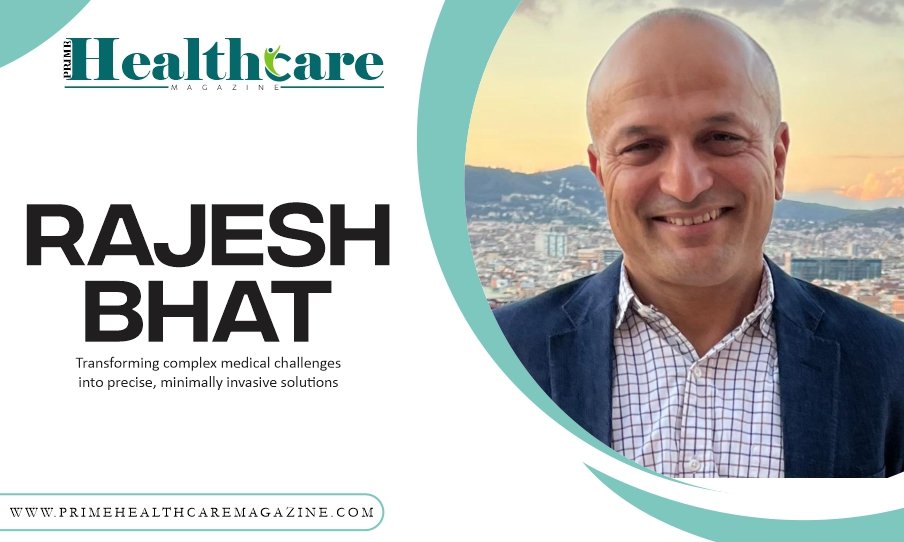
Rajesh Bhat, MS, FRCS, FRCR, EBIR, FCIRSE
Consultant Vascular & Interventional Radiologist | Ninewells Hospital and Medical School, NHS Tayside | Medical Director, Scottish Vein Centre
Transforming complex medical challenges into precise, minimally invasive solutions
Medicine is often described as a profession of science, but at its heart, it is a profession of service. For Rajesh Bhat, that understanding began long before he entered medical school.
Growing up in Dandeli, a small town in Karnataka, India, Rajesh was surrounded by the realities of medicine from an early age. Both of his parents were doctors, and their commitment to serving the local community gave him a first-hand understanding of what it meant to be a physician. Their work was not simply about diagnosing illness or prescribing treatment. They were trusted members of the community, people whom families depended upon during some of the most difficult moments of their lives.
That environment shaped his ambitions.
Even before medical school, Rajesh knew that he wanted to become a surgeon. He completed his MBBS at Karnatak Medical College, Hubli, before undertaking postgraduate training in general surgery at what became the Karnatak Institute of Medical Sciences.
Yet his professional journey would eventually move beyond conventional surgery.
A move to the United Kingdom in 1997 opened the door to a new chapter. He initially continued his surgical training and obtained his FRCS qualifications through the Royal Colleges in Edinburgh and Glasgow. During his early years of training in the UK, he gained experience across intensive care, accident and emergency medicine, vascular surgery and other surgical specialties.
It was during a vascular surgery rotation that he encountered interventional radiology.
The experience changed the direction of his career.
He saw that complex and potentially life-saving procedures could be performed through tiny access points, often under local anaesthesia, using sophisticated imaging to guide treatment with remarkable precision. The possibility of treating serious disease without the trauma associated with traditional open surgery immediately captured his imagination.
He had discovered the field that would define his career.
In 2001, Rajesh moved to Scotland to undertake specialist radiology training before subspecialising in interventional radiology. Scotland proved to be an ideal environment, professionally and personally. The clinical exposure, case mix and training opportunities were exceptional, while the natural beauty reminded him of the landscapes of his childhood home in Karnataka.
After completing extensive training across Scottish centres, he began his career as a consultant at Ninewells Hospital and NHS Tayside in 2006.
Nearly two decades later, his work reflects the evolution of interventional radiology itself: from an emerging specialty into an essential component of modern, multidisciplinary healthcare.
From Surgery to Image-Guided Medicine
Interventional radiology occupies a unique position within modern medicine. It combines advanced imaging, procedural expertise, anatomy, technology and clinical decision-making to treat patients through minimally invasive techniques.
For Rajesh, the attraction has always been the breadth of possibilities.
His clinical practice has involved complex endovascular and interventional procedures, with a particular interest in vascular intervention. Over the years, he has been involved in the treatment of abdominal and thoracic aortic aneurysms, emergency embolisation for severe haemorrhage, mechanical thrombectomy for stroke and emergency interventions for sepsis control.
These are situations where precision is not simply desirable; it can determine the outcome.
One of the defining characteristics of his work has been the ability to combine technological sophistication with calm clinical judgement. Modern interventional procedures can involve long hours, complex anatomy and rapidly changing circumstances. The technology may provide increasingly detailed information, but it is the clinician who must interpret that information, make decisions and lead the team.
For Rajesh, that combination of technology and human expertise is what makes interventional radiology so compelling.
“The amazing work that could be performed even just under local anaesthetic with minimal access techniques immediately attracted me.”
That early fascination has continued throughout his career.
His professional profile and academic record reflect long-standing involvement in vascular and interventional radiology, including research and publications involving endovascular treatment and vascular disease.
Precision Through the Power of Imaging
Medical imaging has changed dramatically during Rajesh’s career. Among the developments that have had the greatest impact on his area of practice, he highlights the advancement of three-dimensional imaging and image-fusion technology.
The importance of these technologies becomes particularly clear in complex vascular procedures.
When a patient has a complicated abdominal aortic aneurysm, for example, high-resolution CT imaging can generate detailed three-dimensional anatomical information. This information can then be used in the planning and development of customised endovascular grafts.
During the intervention itself, those detailed images can be fused with live interventional imaging.
The result is a more precise procedural environment.
For Rajesh, this represents one of the most significant advances in modern image-guided intervention because it allows clinicians to understand the patient’s anatomy in greater detail before and during treatment.
The future of interventional medicine is not simply about better images. It is about turning better images into better decisions and safer treatments.
This philosophy also explains why he views technological progress as an opportunity rather than a replacement for clinical expertise.
Artificial Intelligence: An Opportunity, Not a Threat
Artificial intelligence has become one of the most discussed developments in healthcare, particularly within radiology.
While some professionals question whether AI could eventually replace aspects of the radiologist’s role, Rajesh takes a different view.
He sees AI as a powerful clinical assistant.
In his view, artificial intelligence could undertake many basic screening tasks, assist with the reading of scans and X-rays, and provide an additional layer of review for complex imaging. It could potentially help identify small incidental findings that might otherwise be overlooked.
Used appropriately, these capabilities could improve reporting speed, accuracy and consistency.
But the most exciting possibilities may extend beyond diagnostic imaging.
Rajesh believes AI-assisted robotic interventional systems could eventually improve procedural safety for both patients and operators. Robotic technologies may allow procedures to be performed with greater precision while reducing radiation exposure to medical staff.
The important distinction is that technology should support clinical judgement rather than replace it.
AI can process information at extraordinary speed, but medicine still requires context, experience, communication and responsibility.
The interventional radiologist must understand the patient’s condition, consider the risks and benefits of treatment, communicate with the patient and coordinate with the wider clinical team.
Technology can enhance those abilities. It cannot substitute for them.
The Next Generation of Minimally Invasive Treatment
Rajesh expects the coming decade to bring further transformation to image-guided intervention.
Advances in stents, stent grafts, coils and other implantable devices will continue to expand the range of diseases that can be treated using minimally invasive techniques.
The implications for patients are significant.
Where traditional open surgery may require substantial incisions, prolonged recovery and longer hospital stays, image-guided intervention can sometimes achieve the same therapeutic objective through a much less invasive approach.
This can translate into earlier discharge, faster recovery and improved patient satisfaction.
The next major evolution could come through robotics.
Robotic image-guided intervention has the potential to improve procedural precision while reducing radiation exposure to healthcare professionals. As the technology develops, it may become increasingly integrated into complex vascular and non-vascular procedures.
For Rajesh, this is not science fiction. It represents a natural continuation of the field’s long-standing movement toward precision, safety and minimal invasiveness.
The central objective remains unchanged: achieving the best possible patient outcome with the least possible burden of treatment.
The Human Side of a Highly Technical Specialty
It would be easy to define an interventional radiologist entirely through technical ability.
Rajesh believes that would be a mistake.
Technical expertise is essential, but it represents only part of what makes an exceptional clinician.
An outstanding interventional radiologist must also understand the disease process, communicate effectively with patients, remain calm during difficult procedures, lead teams and respond appropriately when unexpected challenges arise.
In complex medicine, pressure is unavoidable.
Some procedures can continue for seven or eight hours. Decisions may need to be made when the team is tired and the clinical situation is constantly evolving.
That is why Rajesh places such importance on mental stamina and non-technical skills.
“Complex medical practice in any specialty is not a sprint, but a marathon.”
For him, empathy is equally important.
Patients do not experience medical procedures as technical exercises. They experience them as deeply personal events, often involving fear, uncertainty and vulnerability.
The ability to understand that perspective can be as important as the ability to perform the procedure itself.
Teaching the Doctors of Tomorrow
Alongside clinical practice, education has been a major part of Rajesh’s professional journey.
He has held several leadership and educational responsibilities, including roles connected with interventional radiology training, regional planning and professional education. His experience has included responsibilities such as Lead for Interventional Radiology within the East of Scotland Vascular Network, Training Programme Director for the East of Scotland Training Scheme, Regional Specialty Advisor for the Royal College of Radiologists, and examiner responsibilities for the Royal College of Radiologists.
He has also held leadership roles within the British Society of Interventional Radiology.
His involvement in national interventional radiology planning and education is consistent with his broader belief that clinical excellence and teaching should never be separated.
For Rajesh, teaching is not simply about passing knowledge from one generation to the next.
It is also a way of improving oneself.
“Teaching is the best form of learning and improving your own skills.”
There is another motivation behind his commitment to education: the knowledge that today’s trainees will eventually become tomorrow’s consultants.
His greatest satisfaction therefore does not necessarily come from personal recognition. It can come from seeing doctors who trained within his centre establish themselves as consultants and flourish in their own careers.
That is a different kind of legacy.
It is one that continues through other people.
Building Services That Make a Difference
Some of Rajesh’s most fulfilling professional achievements have involved establishing new services and expanding what can be offered to patients.
Among these are the development of complex endovascular aneurysm treatments, pulmonary arteriovenous malformation treatment using embolisation and emergency endovascular treatment for patients presenting with ruptured aneurysms.
These achievements demonstrate an important aspect of leadership in medicine.
Clinical leadership is not simply about holding a title. It is about identifying unmet needs, bringing together the right expertise and creating systems that enable patients to receive treatment that may previously have been unavailable.
The Scottish Vein Centre:
His experience also extends beyond the NHS.
More recently, Rajesh has taken on the role of Medical Director at the Scottish Vein Centre, alongside his consultant position at Ninewells Hospital and Medical School. The role has added a new dimension to his career, giving him the opportunity to combine his clinical expertise with leadership and the practical challenges of running an independent healthcare service.
The Scottish Vein Centre is Scotland’s longest-established dedicated private vein clinic, focusing exclusively on the treatment of leg veins. Unlike traditional surgical approaches, the centre specialises in modern, minimally invasive treatments for varicose and thread veins, including endovenous laser treatment and ultrasound-guided foam sclerotherapy. Patients receive a detailed ultrasound assessment at their first visit and can discuss their treatment options directly with the specialist who will carry out the procedure. Its walk-in, walk-out model means treatment can usually be performed without general anaesthesia or hospital admission, allowing patients to return to their normal lives quickly.
The centre’s approach to specialist, personalised care has also been recognised by Healthcare Improvement Scotland, which awarded it an “Exceptional” grading across all three categories assessed during its 2024 inspection.
For Rajesh, leading the centre has meant taking on responsibilities that extend beyond clinical practice. As well as treating patients, he is involved in developing the team, maintaining high standards of care and understanding what patients value most from their treatment. It has given him the opportunity to bring together his medical knowledge with the broader responsibilities of building and leading a healthcare service.
His aim is not simply to run a successful business, but to create a service where patients can access specialist vein expertise and receive appropriate, personalised care for their individual needs. In many ways, the role brings together the different aspects of his career: clinical experience, innovation, leadership and a commitment to improving the patient experience.
It has also given him a different perspective on patient care. His NHS practice often involves life-threatening conditions where the objective is to stabilise and save a patient’s life. Treatment for varicose veins, by contrast, is rarely about an immediate threat to life. Instead, it can be about improving symptoms, mobility, confidence and quality of life.
Both are meaningful.
One patient experience particularly illustrates the human impact of this work. Rajesh recalls the satisfaction of seeing a young patient enjoy a holiday wearing shorts after successful treatment for varicose veins, something the patient had previously avoided because of the condition.
For a clinician, such moments can be deeply rewarding.
They demonstrate that successful healthcare is not measured only by survival or technical success. It can also be measured by the simple things patients are able to do again.
The Power of Multidisciplinary Medicine
Modern complex healthcare increasingly depends on collaboration.
Rajesh strongly rejects the idea of the individual “heroic” surgeon or physician working independently. The most successful outcomes, he believes, come from coordinated multidisciplinary teams.
His own experience in complex abdominal and thoracic aortic aneurysm treatment demonstrates this clearly.
Such procedures require the combined expertise of interventional radiologists, vascular surgeons, vascular anaesthetists, specialist radiographers and nurses.
Every member of the team has a distinct responsibility.
The radiologist brings procedural and imaging expertise. The vascular surgeon contributes surgical knowledge. Anaesthesia specialists manage the patient’s physiological needs. Radiographers provide essential technical support, while nurses contribute throughout the patient’s journey.
No single discipline can replace the others.
The result is not simply a procedure performed successfully; it is a coordinated system of care built around the patient.
This philosophy is increasingly important as medical conditions become more complex and treatment options continue to expand.
Reimagining the Role of the Interventional Radiologist
One of the challenges facing interventional radiology is awareness.
Even within the medical profession, the role of the interventional radiologist is sometimes poorly understood.
Rajesh believes this is one reason why international interventional radiology organisations have increasingly embraced descriptions such as “image-guided surgeon.”
The terminology reflects the evolution of the specialty.
Interventional radiologists are no longer simply specialists who interpret images and provides technical expertise. They actively treat disease using imaging as their guide and look after patients in a multidisciplinary environment.
They can stop internal bleeding, open blocked vessels, treat aneurysms, remove blood clots and deliver targeted therapies, all through minimally invasive approaches.
This changing role requires greater communication between specialties and greater awareness among patients.
The more healthcare professionals and patients understand what interventional radiology can offer, the more opportunities there are to choose minimally invasive treatment where clinically appropriate.
A Career Built on Service, Innovation and People
Looking back, Rajesh identifies several achievements that have given him particular satisfaction.
Establishing new clinical services has been one.
Helping develop complex endovascular aneurysm treatment has been another.
Building services for pulmonary arteriovenous malformations and emergency endovascular aneurysm treatment has also been significant.
But perhaps the most personal form of professional achievement has been watching people he has trained become successful consultants themselves.
That perspective reveals something important about his leadership philosophy.
A career in medicine is not defined solely by the number of procedures performed or positions held. It is also defined by the systems created, patients helped, colleagues supported and future professionals inspired.
His contribution to the wider interventional radiology community is also reflected in his involvement in professional guidance and service development. Rajesh was among the contributors to the British Society of Interventional Radiology’s work on the provision of interventional radiology services, highlighting the importance of accessible emergency and specialist IR provision.
Looking Toward 2030
The next decade is likely to bring major changes to medical imaging.
Artificial intelligence will become increasingly embedded in imaging workflows. Robotics may transform procedural environments. Three-dimensional reconstruction and image fusion will continue to improve planning and precision. New devices and implantable technologies will make more conditions suitable for minimally invasive treatment.
Yet Rajesh’s philosophy suggests that the most important transformation will not be technological alone.
It will be the ability of clinicians to combine technology with human judgement.
The future radiologist will need to be comfortable with new imaging platforms, software and artificial intelligence. But they will also need to communicate with patients, work across specialties, lead teams and make difficult decisions under pressure.
That balance will define excellence.
For Rajesh, the future is therefore not about choosing between technology and humanity.
It is about bringing them together.
Advice to the Next Generation
For aspiring radiologists and interventional specialists, Rajesh’s advice is straightforward.
Work hard during training.
Give everything possible to learning and developing technical expertise.
But never assume that technical knowledge alone is enough.
“Knowledge and technical expertise is only half the job.”
The other half involves human factors and non-technical skills.
Empathy matters.
Communication matters.
Teamwork matters.
Resilience matters.
The ability to remain calm under pressure matters.
And perhaps most importantly, the desire to continue learning matters.
Medicine does not stand still. The technology available to today’s trainee may look completely different from what is available a decade from now. The professionals who thrive will be those who remain curious and adaptable.
Rajesh’s own journey, from growing up in Dandeli to training in India, moving to the United Kingdom, discovering interventional radiology, building a career in Scotland and contributing to specialist education and service development—is itself an example of that principle.
A Vision Beyond the Image
Rajesh Bhat’s career illustrates how medicine can evolve when clinical curiosity meets technological innovation and a genuine commitment to patient care.
His journey began with the example of two doctors serving a small community in India. It continued through surgical training, international experience and a pivotal encounter with interventional radiology. Today, his work encompasses complex vascular intervention, emergency procedures, education, professional leadership and the development of minimally invasive services.
But the most compelling part of his story is not simply the technology.
It is the philosophy behind its use.
Every sophisticated scanner, robotic platform, stent, graft or image-fusion system ultimately serves one purpose: to help clinicians make better decisions for patients.
For Rajesh Bhat, the future of medical imaging is therefore about much more than seeing disease more clearly.
It is about treating it more precisely.
It is about making complex procedures safer.
It is about reducing the burden of treatment.
It is about empowering multidisciplinary teams.
And above all, it is about ensuring that innovation never loses sight of the person at the centre of every image, the patient.
As medical imaging moves toward an increasingly intelligent, precise and minimally invasive future, Rajesh Bhat represents a generation of specialists helping to define what comes next.
His message to the next generation is simple: build your expertise, remain human, embrace innovation and never stop learning.
Because the future of medicine will belong not only to those who understand the newest technology, but to those who know how to use it with skill, judgement and compassion.