
Pallavi A. Singh: Where Intelligence Meets Empathy in Modern Healthcare
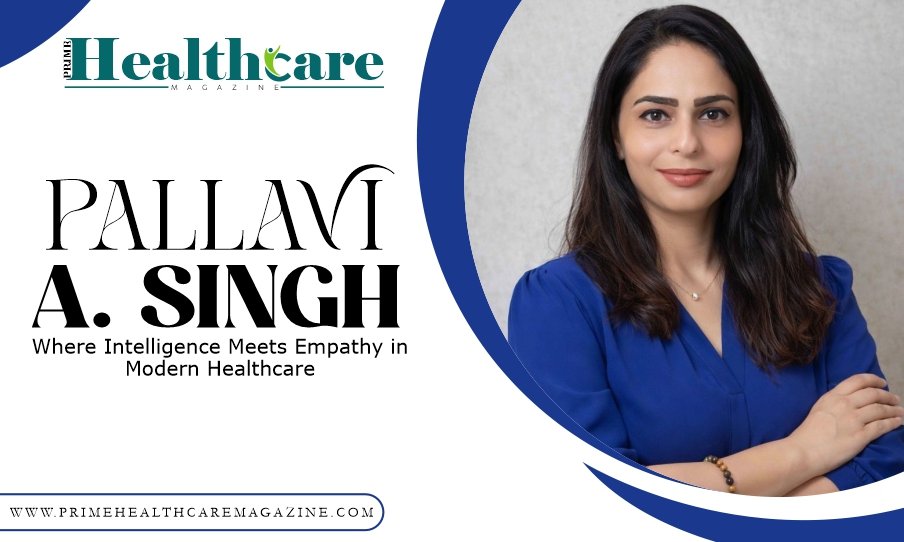
The stories of millions of patients are not written in words—they live in data. Quietly embedded in digital records across global healthcare systems, they wait to be understood. Pallavi A. Singh has built her career decoding those stories—turning fragmented information into insight, and insight into meaningful action.
As Vice President of Data & AI Products at a leading consulting firm, Pallavi operates at the intersection of technology, strategy, and human impact. With over sixteen years of experience, she brings a clear point of view: technology only creates value when it is practical, trusted, and deeply aligned to real-world needs. Her work goes beyond innovation for its own sake—she focuses on building solutions that help clinicians make better decisions and enable patients to receive timely, effective care.
Pallavi has led large-scale data transformations, integrating more than 60 million patient records into modern, cloud-native ecosystems. For her, this is not simply about scale—it is about creating a strong, intelligent foundation where machine learning and analytics can uncover patterns that directly improve outcomes. She has led global teams of over 150 professionals, delivering impactful solutions across clinical risk modeling, population health, patient segmentation, and predictive intelligence. Her leadership is defined by one principle: outcomes over optics.
Her expertise spans advanced data platforms such as Snowflake and Databricks, along with a deep commitment to responsible and ethical AI. She champions the idea of data as a product—designed for reuse, governed with rigor, and aligned to business objectives. Through disciplined governance and platform modernization, she has driven measurable value, including identifying over $10 million in savings through strategic consolidation initiatives.
A recognized voice in the data and AI ecosystem, Pallavi is a LinkedIn Top Voice with a following of over 30,000 professionals. She is known for bringing clarity to complexity—cutting through industry noise with perspectives that are both practical and forward-looking.
As a keynote speaker and trusted advisor to senior executives, Pallavi advocates for a people-first approach to technology. She believes that the true power of platforms lies in enabling teams to innovate with confidence while staying grounded in real-world impact. Her current focus is on building next-generation, digitally native systems—including generative and agentic AI—that simplify and elevate the healthcare experience.
At the core of her work is a clear and compelling mission: to ensure that intelligence strengthens the human side of care. By transforming unstructured data into actionable insight, Pallavi is shaping a future where technology does more than inform decisions—it builds trust, restores time, and ultimately improves lives.
A Return to Healthcare Through a Digital Lens
Pallavi A. Singh once envisioned a future in medicine. While that path did not unfold as planned, her journey found its way back to healthcare—through a different, yet equally impactful lens.
What draws her deeply to healthcare is its unmistakable connection to real life. Few fields offer such a direct line between effort and impact. Every dataset tells the story of a patient’s journey. Every insight carries the potential to influence a clinical decision. Every improvement, no matter how small, can shape outcomes in meaningful ways.
Early in her career, Pallavi witnessed the consequences of fragmented systems—disconnected data, delayed insights, and missed opportunities that could affect patient care, sometimes critically. That experience became a defining moment. It shifted her perspective from building systems to solving for impact. She recognized that beyond clinical expertise, there was a powerful opportunity to transform healthcare by making information more accessible, timely, and actionable.
From that point on, her work took on a deeper purpose. She began to see herself not just as a technologist, but as an enabler within the broader care ecosystem—someone who could empower clinicians, researchers, and care teams with the intelligence they need, exactly when they need it.
Today, her focus is on building intelligent, patient-centric ecosystems where data engineering and AI come together to support better decisions, expand access to care, and improve health outcomes at scale. While she may not treat patients directly, her work helps ensure that those who do are equipped with clarity, speed, and confidence.
Healthcare, for Pallavi, is where technology transcends efficiency and becomes deeply human. It is a space where innovation is measured not just in performance metrics, but in lives improved.
And that is what makes her journey not a detour—but a return with greater purpose
Augmenting Clinical Intuition with Intelligent Systems
At the scale of millions of patient records, it’s easy to focus on speed, efficiency, and automation. Pallavi A. Singh takes a different view. To her, healthcare is not just a system—it is a deeply human experience shaped by trust, empathy, and clinical judgment.
That belief defines her approach: technology should augment human care, not replace it.
She has led large-scale AI and data transformations, but her focus has never been on replacing clinicians—it has been on strengthening them. The systems she builds are designed as decision-support, not decision-makers. AI identifies risks, surfaces insights, and recommends next steps—but the final call always remains with the clinician.
In doing so, she preserves what matters most: human intuition.
Just as importantly, she focuses on reducing the invisible burden clinicians carry every day. By automating documentation, streamlining data access, and delivering real-time insights, her work gives healthcare professionals something invaluable—time to focus on patients.
Designing for Trust: Where AI Meets Accountability
In healthcare, adoption doesn’t come from innovation alone—it comes from trust.
Pallavi ensures that every system her team builds is transparent, explainable, and aligned with real clinical workflows. For her, it’s not enough for AI to be accurate—it must also be understood.
Clinicians need to know why a recommendation is made, not just what is suggested.
That’s why she involves them early—co-creating solutions that reflect real-world care environments, not theoretical models. This collaboration transforms AI from an external tool into a trusted partner in care delivery.
Her success metric is simple yet powerful: not how much work AI replaces, but how much it enhances care.
From Intelligence to Empathy: A Seamless Partnership
For Pallavi, the future of healthcare lies in a seamless partnership between intelligence and empathy.
AI brings precision, scale, and foresight. Humans bring context, compassion, and judgment.
Together, they enable a shift from reactive care to proactive, preventive healthcare—where risks are identified early, interventions happen sooner, and care becomes continuous rather than episodic.
Yet she is clear about one thing: the human layer is irreplaceable.
A model can predict risk—but only a clinician understands the patient behind that data
Breaking Silos: The Power of Unified Data
One of healthcare’s biggest challenges has always been fragmentation. Clinical, operational, and real-world data often exist in isolation—limiting the ability to generate meaningful insights.
Through modern lakehouse architectures powered by Databricks and Snowflake—complemented by platforms like Microsoft Fabric and Google BigQuery, and standards such as FHIR—Pallavi is enabling a shift from data consolidation to intelligence activation, where unified data foundations power real-time decision-making and truly personalized care.
This shift is transformative.
It enables real-time insights, supports predictive modeling, and creates a single source of truth that clinicians, researchers, and decision-makers can trust. More importantly, it allows healthcare systems to move faster—from insight to action, and from action to impact.
Trust as the Foundation of Data and AI
For Pallavi, data is not just an asset—it is a responsibility.
Early in her career, she saw how fragmented and inconsistent data could distort the understanding of a patient’s journey. That realization shaped her philosophy: before intelligence, there must be trust.
She treats governance as a design principle, not a backend function—embedding data quality, interoperability, and security into every layer of the system.
But beyond compliance, her focus is on respect.
Because behind every dataset is a real person.
Transparency, traceability, and ethical AI are non-negotiable in her work. Every insight must be explainable. Every model must be fair. Every decision must be accountable.
Scaling Innovation with Responsibility
As she scaled global teams, Pallavi recognized a critical tension—between the speed of innovation and the responsibility of working in healthcare.
Her answer was intentional culture.
She encourages experimentation, but within clear ethical boundaries. Her teams are empowered to innovate—but also expected to ask deeper questions:
- Should we build this?
- Who does itimpact?
- Is it fair, safe, and meaningful?
Over time, this creates a shift—from building solutions to building responsible solutions with purpose.
Real-World Evidence: Bridging Science and Reality
Some of the most valuable insights in healthcare don’t come from controlled trials—they come from real life.
Through real-world evidence (RWE), Pallavi focuses on understanding how patients actually experience care—across different environments, behaviors, and contexts.
This allows her teams to move beyond generalized treatment models toward truly personalized care.
It also transforms healthcare into a continuous learning system—where every patient interaction contributes to better decisions, better treatments, and better outcomes.
The Inflection Point: Generative & Agentic AI
Healthcare is entering a new era.
With the rise of Generative and Agentic AI, systems are no longer just analyzing data—they are beginning to reason, create, and act.
From clinical documentation to care coordination, the possibilities are vast.
But Pallavi is clear-eyed about the risks.
In healthcare, even small errors can have serious consequences. That’s why she strongly advocates for a human-in-the-loop model, where AI supports—but never replaces—clinical oversight.
For her, the future of AI in healthcare will not be defined by its power, but by its responsibility.
From Reactive to Predictive Care
Perhaps the most profound shift she envisions is moving healthcare from reactive to proactive.
Through data products and decision intelligence, insights are no longer confined to dashboards—they are embedded directly into workflows.
This enables earlier interventions, personalized care pathways, and continuous patient engagement.
Healthcare, in this model, becomes not just a service—but a living, connected ecosystem.
A Vision for the Future
Looking ahead, Pallavi sees a future where healthcare is:
- Predictive rather than reactive
- Personalized rather than standardized
- Continuous rather than episodic
She anticipates the rise of AI-first ecosystems, digital twins, and intelligent care pathways that adapt in real time.
But at the center of that future remains one constant: the human experience of care.
A Message to Future Leaders
To those entering this space, her advice is simple:
Start with purpose.
Build with empathy.
Innovate with responsibility.
Because in healthcare, impact is not always visible—but it is always real.