
The Physician of the Presidents: Padma Shri Prof. Dr. Mohsin Wali’s Legacy of Trust and the Pulse of a Nation
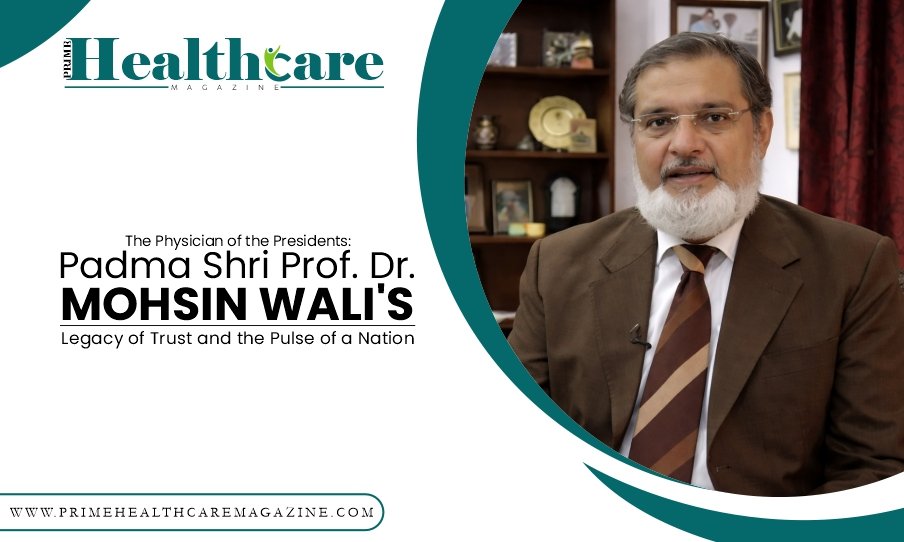
Trust is the most vital medicine of all in the quiet halls where history is made, and the heavy weight of a nation’s future is carried. To serve the health of a leader is to protect the stability of a country, and very few individuals have ever been granted such a sacred responsibility. Padma Shri Prof. Dr. Mohsin Wali stands as a legendary name in Indian cardiology, a man whose hands have cared for the hearts of those who led the world’s largest democracy. Recognized as an icon of trust and a leader shaping the future of medical excellence, his career is a testament to what can be achieved when brilliant skill is paired with a steady, humble spirit.
His journey into the highest levels of medicine began with a record-breaking start. At the young age of thirty-three, when most are still finding their footing, Dr. Wali was appointed as the physician to President R. Venkataraman. This made him the youngest doctor to ever serve an Indian President. But his service did not end with one term. He went on to become the only physician in history to serve three Presidents of India, providing care to Shankar Dayal Sharma and later to Pranab Mukherjee. In rooms where the pressure of the world was felt every day, Dr. Wali was the calm presence ensuring that the health of the presidency remained strong. “Medicine is more than just treating a symptom; it is about holding a person’s trust in your hands. When you are responsible for the health of those who lead a nation, you realize that every heartbeat matters for the collective good. True excellence is found in the quiet, steady pursuit of healing.”
In 2007, the Government of India recognized his immense contributions to the field of medicine by awarding him the Padma Shri, the fourth-highest civilian honor in the country. Today, as a Senior Consultant at Sir Ganga Ram Hospital in Delhi, he continues to bring that same level of elite care to every patient he meets. He remains a teacher and a guide, showing the next generation of doctors that while technology may change, the human connection between a healer and a patient remains the most powerful tool in the bag.
As Dr. Wali moves forward in his mission, his influence reaches far beyond the walls of a hospital or a presidential palace. He is a man who has witnessed history from the front lines, yet he remains deeply focused on the future of healthcare. His story is one of a lifelong commitment to the pulse of a nation, a journey where every decision is guided by a deep sense of duty and an enduring belief in the value of human life.
Leading Through the Storm: A Healer’s Own Battle
Even for a leader in the medical field, the path to healing can be personal and fraught with peril. Prof. (Dr) M. Wali faced his own major test when he was struck by a severe viral infection that affected fifty percent of his lungs. During this time, he sat across from his own colleagues, not as a consultant, but as a patient fighting for his breath. This experience deepened his belief that medicine is as much about human connection as it is about clinical skill. He emerged from this trial with a renewed sense of purpose, using his own recovery to prove that even severe lung damage can be overcome with time and the right care.
His survival became a message of hope for many who feared that physical damage from the virus was permanent. By speaking at length in public forums, he demonstrated that the body has a remarkable capacity to repair itself. He often points out that being able to speak a full sentence without pausing for air is the first sign of a returning life. For him, the struggle was a reminder that every patient needs a reason to keep fighting, and a doctor’s presence is often the spark that keeps that flame alive. “I sat there with half my lungs struggling, but I am here today to show that recovery is possible. We must not let fear be the primary driver of our decisions. The body is a miracle of repair, and the mind must lead the way back to health.”
The Science of Discipline and Faith
Dr. Wali often bridges the gap between ancient traditions and modern medical science. During periods of fasting and spiritual reflection, he advocates for a balance of physical health and mental discipline. He believes that fasting is not just about staying hungry, but about mastering one’s behavior and emotions. To him, the ability to control one’s anger and words while hungry is a profound exercise in immunity and self-care. He sees these practices as a way to boost the body’s natural defenses, creating a setting where healing can flourish. In his public health advice, he stresses the importance of simple, disciplined actions. He encourages families to maintain distance and wear protection even within the home if there is a risk of infection. His approach is grounded in the reality of the environment, where the air itself can carry hidden threats. He insists that waiting for a test result is often a mistake; instead, one must treat the symptoms immediately to prevent the fire from spreading through the body.
A Voice for the Next Generation
As a teacher and mentor, Dr. Wali is vocal about the need for better communication between doctors and the public. He warns against the dangers of misinformation and the habit of following medical advice from unverified sources. He has seen patients suffer because they stopped essential treatments based on rumors rather than speaking with their own physicians. His mission is to ensure that medical truth is accessible and clear, helping people navigate the confusing landscape of modern healthcare with confidence. “We are fighting a battle on two fronts: the virus in the body and the confusion in the mind. A doctor’s duty is to clear the path for the patient so they can move forward without doubt. True medical excellence is found in the transparency of our guidance.”
By advocating for smarter vaccination strategies and a hands-on approach to patient care, he continues to lead the way toward a more resilient future. He remains a man of action, always looking for the next way to improve the lives of those around him. His journey is a reminder that the best leaders are those who have walked the difficult path themselves and returned with the wisdom to guide others through the dark.
The Invisible Fire and the Need for Speed
Prof. Dr. Mohsin Wali looks at a viral outbreak not just as a medical event, but as an invisible fire that enters the home. He explains that by the time a formal test result confirms the presence of the intruder, the damage is often already done. In his view, the five or six days spent waiting for a report are the most dangerous. During this window, the body is left to fend for itself while the infection spreads. He likens this to a house on fire where the owner spends all their time filing a police report about a thief instead of picking up a hose to put out the flames.
To save lives, he advocates for a mindset of immediate intervention. He believes that starting basic treatments like blood thinners as soon as symptoms appear is vital for survival. For Dr. Wali, waiting for a piece of paper to tell you what you already feel in your chest is a gamble that no one should take. He points out that the real cause of death in many cases is the massive inflammation that follows the initial infection. By the time the virus has left the body, it has already started a chain reaction that can lead to organ failure. “We must stop waiting for the name of the enemy before we start defending ourselves. If your house is burning, you do not wait for the fire department to tell you it is hot. You grab the water. In medicine, early action is the only way to stay ahead of the damage.”
A Vision for National Medical Strength
Dr. Wali is a firm believer in the power of domestic medical research. He expresses a deep sense of pride in the vaccines developed within India and suggests that the country must trust its own experts. He notes that different parts of the world face different challenges. For example, some complications seen in Europe are rarely found in India, and vice versa. This means that a one-size-fits-all approach to global health often fails to account for the unique traits of the Indian population. He wants to see more Indian scientists and thinkers sitting together to find solutions that are specifically designed for their own people.
He also warns of a future where the public might become confused by the variety of medical options available. He predicts that as more treatments enter the market, people will naturally start comparing them based on percentages and reports. This can lead to a situation where the government and doctors are pressured to provide one specific brand over another. Dr. Wali suggests that the best way to handle this is through open and honest communication. He believes that the medical community must lead the conversation, helping the public understand that every tool has its place and its purpose.
Wisdom for the Vulnerable and the Young
The safety of the most fragile members of society is always at the forefront of his mind. Dr. Wali expresses concern for children, noting that newer versions of common viruses are becoming more contagious and affecting younger age groups. He shares stories of very young children testing positive, which serves as a reminder that no one is truly immune. His advice for families is simple but firm: if you feel even a small scratch in your throat or a slight fever, stay away from the elderly and the young. He believes that physical distance is the most basic and effective tool we have to protect those we love.
He also addresses the psychological weight of a long-term health crisis. He mentions that even as a doctor, he felt the need to wear a mask inside his own home because the fear of the unknown can be overwhelming. However, he balances this caution with a message of hope. He points out that the human body is designed to recover. He uses his own ability to speak for forty minutes as proof that the lungs can heal and that a person can return to their full strength. For Dr. Wali, the journey of a patient is not just about the body, but about the spirit and the will to keep moving forward. “A doctor’s voice must be a source of calm in a world of noise. We tell our patients to keep going because we have seen the body’s power to mend. Even when things look dark, there is a path back to the light if we stay disciplined and look out for one another.”
The Journey of a Lifelong Healer
As Padma Shri Prof. Dr. Mohsin Wali continues his work at Sir Ganga Ram Hospital, he remains focused on the evolving nature of health in 2026. He sees the intersection of technology and humanity as the next great frontier. While he values the advancements in diagnostic tools and new medications, he never forgets the importance of a simple conversation. He believes that a doctor who listens is just as effective as a doctor who prescribes. His career has been a long study in the art of human trust, from the presidential palaces to the busy wards of a public hospital.
He encourages the next generation of medical professionals to stay curious and never to stop observing the world around them. For him, every patient is a new chapter in a story that is still being written. He remains a student of the human condition, always looking for a better way to serve and a clearer way to lead. The pulse of the nation is something he feels deeply, and he remains dedicated to ensuring that every heart he touches has the chance to beat stronger and longer.