
The Future of Medical Training: How Surgical Simulation Tools Are Changing Healthcare 
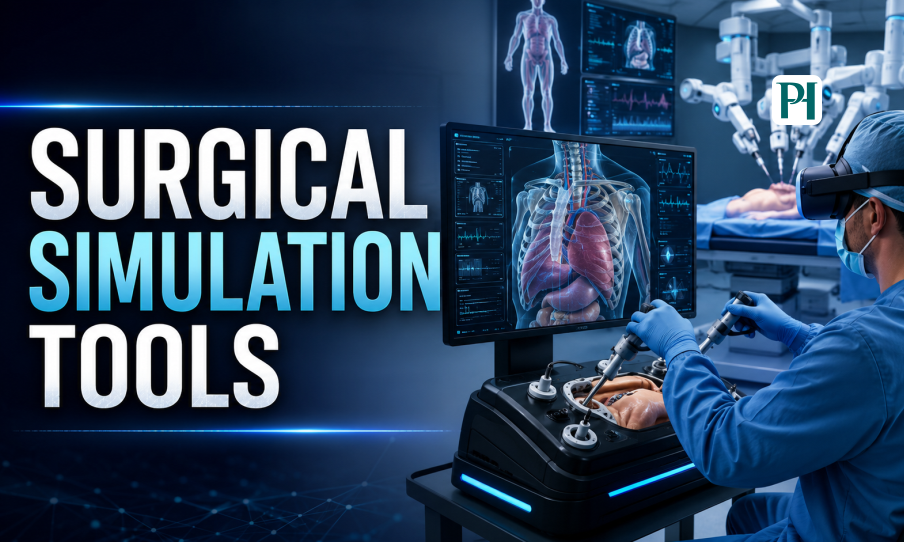
Right now, medicine’s teaching methods are shifting fast – technology builds links between classroom facts and real surgery rooms. Long gone are the days when learners watched quietly or practiced on stiff mannequins giving almost no realistic touch cues. Instead, immersive virtual setups now lead the way in shaping medical know-how. Sitting right in the middle? Simulated surgery platforms turning abstract ideas into doable skill without putting anyone in danger. Errors inside these digital zones turn into growth moments instead of disasters, changing deeply how tomorrow’s doctors gain confidence with patients.
The Technology Shift in Teaching Doctors
Jumping from old-school drills into today’s digital setups shows how fast tech has advanced. Not long ago, practice sessions used fake stuff or bits from animals – neither came close to matching real human bodies. Then computers stepped in, offering lifelike surgery sims that changed everything. Now, smart algorithms team up with 3D imaging and depth-aware interfaces to map out internal structures down to tiny details. Inside these simulations, learners walk through full operations – one cut after another – with bodily reactions that mirror actual patients.
Furthermore, the integration of haptic technology has added a crucial physical dimension to these virtual setups. Haptic feedback allows users to feel the distinct resistance of different tissue layers, distinguishing between bone, muscle, and vascular walls. Because surgical simulation tools replicate these exact tactile sensations, they help residents build muscle memory that is directly transferable to a real operating theater. The software behind these platforms can also introduce unexpected complications, such as a sudden hemorrhage or an anatomical anomaly, forcing the learner to adapt in real time. This dynamic adaptability ensures that medical professionals are not just learning memorized steps, but are actively developing critical thinking and fluid problem-solving abilities.
Enhancing Patient Safety Through Risk-Free Repetition
The primary directive of medicine is to do no harm, and the implementation of advanced training software serves as a powerful shield for patient welfare. In a traditional residency model, a trainee often performs a procedure for the first time on a live patient under strict supervision. While supervision minimizes hazards, it inherently introduces an element of stress and potential variability. Utilizing dedicated surgical simulation tools removes this vulnerability entirely from the early phases of professional development. Surgeons can practice a complex coronary bypass or a delicate neurological resection dozens of times before ever stepping into a sterile clinical environment.
This ability to repeat procedures indefinitely fosters a culture of mastery rather than mere competence. If a resident struggles with a specific angle during an arthroscopic procedure, they can reset the scenario instantly and attempt it again. Because surgical simulation tools track movements with millimeter accuracy, they provide objective data on a trainee’s efficiency, hand steadiness, and economy of motion. This granular feedback helps eliminate subjective bias in performance evaluations, giving educators concrete metrics to determine when a student is genuinely ready to progress. Consequently, patients ultimately receive care from highly confident individuals who have already overcome the steep learning curve in a harmless digital space.
Streamlining Preoperative Planning for Complex Cases
Beyond their immense utility in foundational education, these digital assets are becoming indispensable assets for seasoned attending physicians tackling highly idiosyncratic cases. Every human body is unique, and congenital anomalies or massive traumatic injuries can present structural challenges that defy standard textbook approaches. By uploading patient-specific data from computed tomography or magnetic resonance imaging scans into advanced surgical simulation tools, clinical teams can generate a precise virtual replica of a specific individual’s anatomy. This allows the team to conduct a dry run of the scheduled procedure days before the actual operation takes place.
During these preparatory sessions, the operating team can test various entry points, evaluate different instrument paths, and anticipate potential structural hurdles. When using specialized surgical simulation tools for preoperative planning, the entire team aligns on the strategic approach, which significantly reduces unexpected surprises during the live procedure. This collaborative rehearsal can drastically shorten the total time a patient spends under general anesthesia, lowering the risk of post-operative infections and systemic complications. The ability to preview the exact physical landscape of a diseased organ transforms an unpredictable intervention into a highly orchestrated, predictable execution.
Overcoming Global Accessibility Barriers in Healthcare
The global disparity in medical resources remains a significant challenge, with many developing regions lacking the infrastructure to support intensive, hands-on surgical training. Traditional learning models require expensive physical labs and a steady supply of specialized materials, which are often cost-prohibitive for smaller international institutions. High-quality surgical simulation tools offer a scalable solution to this systemic bottleneck by decentralizing expert knowledge. A single digital installation can train hundreds of students over its lifespan, requiring only electricity and occasional software updates rather than a continuous influx of expensive physical resources.
As cloud computing and virtual reality headsets become more affordable and globally accessible, the democratization of top-tier medical training becomes a tangible reality. A student in a remote clinic can access the exact same instructional modules and spatial scenarios as a resident at a major metropolitan teaching hospital. By embedding standardized assessment metrics within these surgical simulation tools, international medical boards can ensure a uniform level of competency across geographic borders. This global equalization of training resources holds the potential to elevate the baseline standard of surgical care worldwide, ultimately saving countless lives in underserved communities.
The Horizon of Simulated Clinical Interventions
Looking toward the future, the convergence of generative artificial intelligence and spatial computing promises to expand the capabilities of medical training platforms even further. Future systems will likely feature autonomous virtual assistants that offer real-time guidance, dynamically adjusting the difficulty of a scenario based on the user’s stress levels and performance metrics. As surgical simulation tools continue to evolve, they will transition from optional educational supplements to mandatory components of board certification and hospital credentialing. By cementing these sophisticated technologies into the core fabric of medical culture, the healthcare industry ensures that the path to surgical mastery is paved with innovation, precision, and an unyielding commitment to patient safety.
Read Also: Unlocking Growth Through the Power of Strategic Cross Functional Collaboration