
Dr. Pranav Mahadeokar: Making Advanced MRI Diagnostics Reach Every Patient, Importance of Preventive Radiology & AI Optimization 
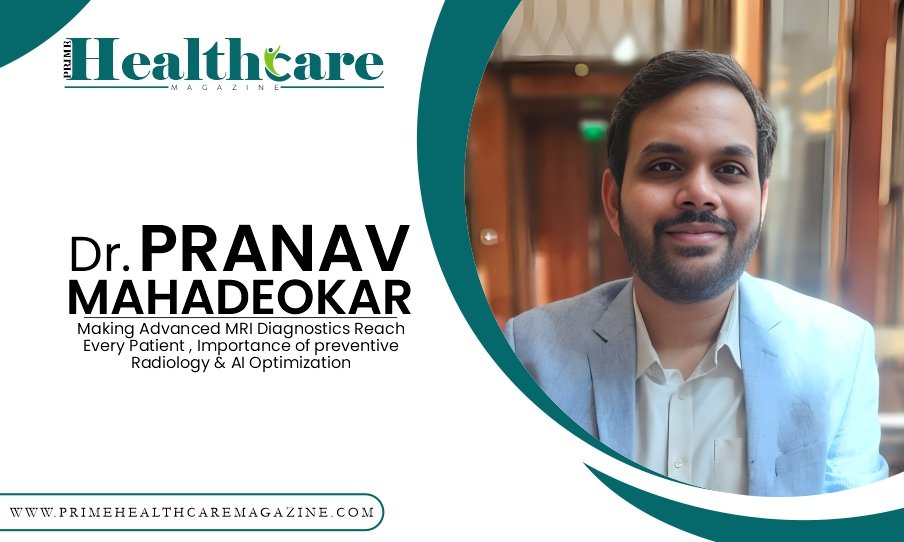
Modern radiology gives doctors the power to detect disease early, guide treatment accurately, and monitor recovery with clarity, and Dr. Pranav Mahadeokar is driving solutions that bring advanced MRI diagnostics closer to more patients across India. Imaging technology has progressed rapidly, yet access still remains uneven across regions. Many people continue to travel long distances for a single high quality scan.
That delay affects treatment timelines and patient outcomes. Dr Pranav Mahadeokar works to change this pattern by supporting wider MRI adoption, indigenous technology growth, and connected diagnostic systems.
As Consultant Radiologist and Head of Department at Ruby Hall Clinic, he sees daily proof of how timely imaging changes medical decisions. For him, MRI carries value only when availability spreads across geography, income groups, and hospital tiers. His focus connects clinical excellence with diagnostic reach.
He speaks consistently about affordability, domestic manufacturing, and digital reporting networks that extend expert interpretation across distance. When imaging becomes locally available, diagnosis speeds up and treatment planning improves. That practical outcome guides his advocacy and professional direction.
Under his leadership, Ruby Hall Clinic, Pune, established India’s first 3T MRI Centre of Excellence in collaboration with Philips. This pioneering initiative represents a major advancement in diagnostic excellence, innovation, and patient-centric care. The partnership was formally announced at the Dubai World Health Expo 2026, where Dr. Mahadeokar, along with Ms. Natalie Grant Nanda, attended the signing ceremony in Dubai. The collaboration brings together clinical expertise and world-class MRI technology — 3T MRI with SmartSpeed AI — positioning Ruby Hall Clinic at the forefront of advanced imaging in the country. The newly established Centre of Excellence is envisioned as a hub for cutting-edge imaging, research, and clinical collaboration. It aims to enhance diagnostic accuracy, optimize imaging workflows, and significantly improve patient outcomes.
He is also credited in setting up India’s first 3T MRI with Smartspeed AI technology at Ruby Hall Clinic in 2024 as well as India’s first indigenous MRI installation (1.5 T Anamaya )at Sangamner , Maharashtra
Why MRI Holds Critical Value
MRI gives detailed images of soft tissues, brain structures, joints, spine, and internal organs without radiation exposure. Doctors depend on it for neurological disease, cancer detection, musculoskeletal injury, and complex internal conditions. Repeat imaging stays safe, which makes MRI suitable for long term monitoring. Dr. Mahadeokar explains that MRI often answers questions that other scans cannot resolve with clarity. Treatment accuracy improves when imaging quality improves. Clinical confidence also rises when the picture remains clear.
The Access Gap Across Regions
A major challenge continues to affect diagnostic equality. High quality MRI systems cluster in metro hospitals. Smaller centres struggle with installation cost and maintenance burden. Imported machines dominate the market, which raises purchase price and service expenses. Currency fluctuation also affects long term cost planning.
Patients feel this gap directly. Travel to distant cities delays diagnosis. Follow up scans become harder to schedule. Treatment decisions wait for imaging confirmation. Dr. Mahadeokar sees this pattern repeatedly in referral cases.
The Rise of Indigenous MRI Systems
A meaningful shift has started through domestic MRI manufacturing. Indian medical technology hubs now produce MRI systems designed for local operating conditions. These machines reduce capital and running cost while maintaining diagnostic quality. Installation at leading national institutes proves technical capability and clinical acceptance.
Lower cost changes adoption patterns. Tier two and tier three hospitals can now evaluate MRI installation with realistic budgets. That shift spreads diagnostic capacity across wider geography.
Designed for Local Realities
Indigenous MRI platforms adapt to Indian infrastructure conditions. Power stability, service logistics, and component replacement receive practical design attention. Modular construction supports faster repair and lower downtime. Compact models also enter development, which supports mobile and semi-urban diagnostic units.
Dr. Mahadeokar highlights operational reliability as a key factor. A machine serves patients only when uptime stays high and maintenance remains manageable.
Digital Reading Through Teleradiology
Radiologist availability varies across regions. Teleradiology fills that gap through secure digital reporting. A scan performed in a smaller centre can reach an expert radiologist in a city within minutes. Interpretation returns through encrypted systems.
This model expands expert reach without requiring physical relocation. Patients receive quality reports quickly. Hospitals manage workload more effectively. Dr. Mahadeokar considers this digital bridge essential for scale.
Training and Skill Development
Technology adoption requires trained technologists and radiologists. Continuous education supports safe scanning protocols and accurate interpretation. Domestic systems encourage local training ecosystems where engineers and clinicians learn together. Knowledge remains inside the system and strengthens long term sustainability.
Policy and Partnership Support
Government manufacturing initiatives and public private partnerships support domestic medical device growth. Research funding and industry collaboration accelerate improvement. Hospitals, technology makers, and policymakers share responsibility for expanding diagnostic reach. Each partner influences scale and quality.
A Patient First Diagnostic Future
Dr Pranav Mahadeokar frames the mission in patient terms. Diagnosis should arrive early and locally. Distance and cost should not decide scan access. When imaging spreads evenly, treatment outcomes improve across the population.
MRI technology continues to evolve. Access must evolve with it. Through clinical leadership and system advocacy, Dr. Mahadeokar supports a healthcare model where advanced diagnostics reach every region, every hospital tier, and every patient who needs clarity for the next medical decision.
Role of Preventive Radiology
In the past decade radiology has shifted from a peripheral diagnostic service to a central pillar of patient-centered care. Preventive radiology is perhaps the most striking illustration of this transformation. Modern scanners can reveal pathology long before symptoms appear, enabling early intervention that can alter the course of many diseases , making radiology proactive rather than reactive. For example , coronary CT angiography offers a non-invasive view of the coronary arteries with high diagnostic accuracy; the latest scanners deliver this information with a fraction of the dose used a few years ago. By identifying atherosclerotic plaques at an early stage, clinicians can initiate lifestyle modifications or targeted therapy, potentially averting myocardial infarction.
Key Preventive Modalities
| Modality | Application | Benefits |
| Coronary CT Angiography | Early plaque detection | Averts infarctions via lifestyle/therapy; low-dose scanners minimize radiation. |
| Liver MRI Elastography | Fibrosis quantification | Pre-cirrhosis intervention; non-invasive stiffness mapping. |
| Ultra-Low-Dose Lung CT | High-risk screening | Catches curable tumors; radiation < chest X-ray. |
| Whole-Body MRI | Multi-organ screening | Radiation-free; flags metastases, musculoskeletal issues, malignancies. |
Dr. Mahadeokar advocates guideline-driven use to avoid overuse, emphasizing early detection’s life-saving potential, as highlighted in Ruby Hall’s World Radiology Day campaigns.
AI Optimization, Not just Adoption
AI is the new buzzword everywhere, yet the real value emerges not from merely “having AI,” but from how seamlessly it integrates into clinical processes and radiology workflows, how it adapts to user behavior, and how it translates into actual clinical outcomes. AI implementation isn’t just a technological step—it’s a design challenge, a workflow challenge, and an optimization challenge. Because in healthcare, effectiveness isn’t about using AI; it’s about using it well. Perhaps it’s time we start talking more about AI optimization—not just AI adoption.
Achieving this requires a holistic approach. Radiologists, data scientists, technologists, and front-line staff must co-design solutions that fit existing workflows rather than forcing clinicians to adapt to rigid algorithms. Continuous monitoring of performance metrics—such as turnaround time, false-positive rates, and user satisfaction—provides feedback loops that refine the system. Training programs should emphasize critical judgment alongside technical proficiency, ensuring that AI serves as a trusted assistant rather than a replacement.
Forward momentum, however, demands caution. Overexposing trainees to AI can erode rational reasoning, turning thinkers into automatons; curricula must prioritize critical judgment. *India’s Digital Personal Data Protection (DPDP) Act mandates rigorous ethical standards: robust data anonymization, explicit patient consent, and transparent AI audits are non-negotiable. Non-compliance not only invites legal risk but also undermines patient trust, potentially stalling the very innovation the law seeks to protect.* Will insurers accept AI-generated reports without radiologist sign-off? Hybrid models—AI drafts vetted by experts—preserve accountability amid cost pressures.