
Building the Future of Healthcare through the Power of Patient‑Centric Ecosystems 
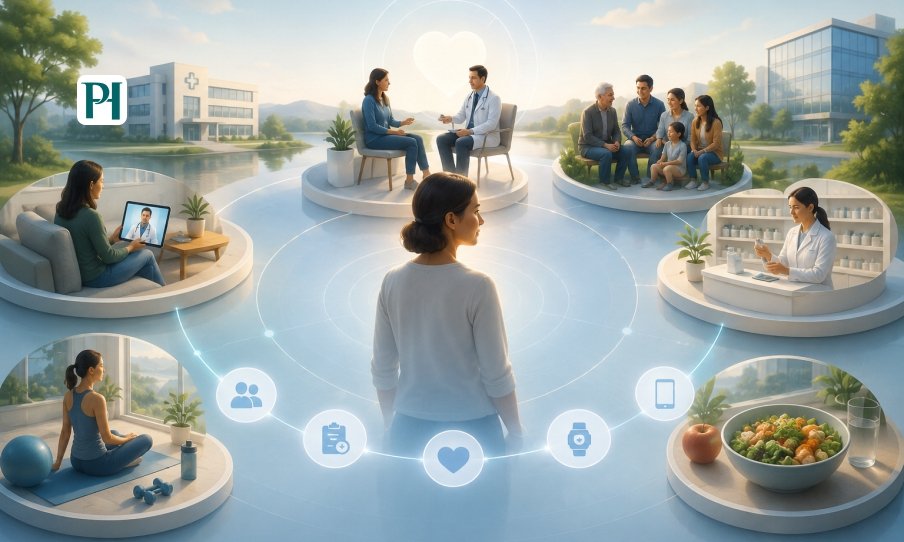
Right now, health care is moving away from old ways of working in isolation. Instead, connections between services put people first. What drives this change? Systems built around patients link tools, information, and real understanding. Years ago, medicine waited until problems appeared. Patients had little say. Now, attention turns to custom support before issues grow. This shift goes beyond adding devices. It reshapes how doctors and communities relate. Each moment in care should feel smooth, clear, light on jargon, full of respect. The goal stays close to ground level – simple, aware, human at its core.
The Structure of Connected Health Systems
A working setup needs more than an online entry point. Built around the patient, strong networks link medical knowledge with everyday routines. From doctor to expert to pharmacy, details move smoothly – no gaps, no confusion. People stay clear of tangled forms and mixed messages when connections are solid. Cloud tech helps, plus shared records let everyone see the full picture. When all sides tap into live updates, decisions gain accuracy. Mistakes drop because what one sees, others do too.
Because every person lives differently, these systems grow stronger by changing shape to fit real life. Not stuck in one way of working, they shift – handling long-term illness just as easily as daily prevention habits. Gone is the old idea that everyone should follow the same path; now choices bend around the individual. Care doesn’t happen in scattered moments anymore – it flows, connects, sticks close like conversation. People aren’t waiting passively – they’re right there, shaping decisions, feeling steady in mind and body.
Leveraging Technology for Human Connection
One might assume that the heavy reliance on data and digital tools would make healthcare feel colder or more mechanical, but the reality is quite the opposite. When implemented correctly, patient‑centric ecosystems use technology to remove the administrative burdens that often distract from the human element of medicine. Telehealth, wearable devices, and remote monitoring tools allow clinicians to keep a watchful eye on their patients without requiring them to spend hours in a waiting room. This convenience fosters a stronger sense of trust and accessibility. When a doctor can view a patient’s glucose levels or heart rate trends via a mobile app, the subsequent consultation becomes much more meaningful and focused on strategy rather than mere data collection.
Furthermore, artificial intelligence is playing an increasingly vital role in refining these patient‑centric ecosystems. AI algorithms can sift through vast amounts of information to identify patterns that might escape the human eye, predicting potential health crises before they occur. This predictive capability transforms care from being episodic to being truly preventative. By anticipating needs, the system can provide tailored educational resources or prompt a timely intervention. This tech-driven empathy ensures that patients feel seen and understood by their care teams, reinforcing the idea that the technology is a bridge to better relationships, not a barrier.
Overcoming Barriers to Seamless Implementation
Transitioning to this new era of medical delivery is not without its hurdles. The successful deployment of patient‑centric ecosystems requires a fundamental change in institutional culture and a commitment to data privacy. Many legacy systems are still built on proprietary software that does not communicate well with outside platforms, creating digital silos that frustrate both providers and patients. Breaking down these walls requires industry-wide standards for data sharing and a move toward open-source collaborations. Moreover, as more sensitive information is shared across digital networks, the necessity for ironclad cybersecurity becomes paramount to maintain the public’s confidence in the system.
Equity also remains a critical challenge in the development of patient‑centric ecosystems. If the benefits of these integrated networks are only available to those with the latest smartphones or high-speed internet, we risk widening the gap in health outcomes. Developers and policymakers must work together to ensure that digital health tools are inclusive, accessible to people with disabilities, and linguistically diverse. True patient-centeredness means accounting for social determinants of health, such as housing stability and food security, and integrating these factors into the broader care strategy. Only when the ecosystem addresses the whole person can it be considered truly successful.
The Horizon of Personalized Medical Experiences
As we look toward the next decade, the continued refinement of patient‑centric ecosystems will likely lead to even more radical innovations, such as genomic-based treatment plans and highly immersive virtual reality therapy. The focus will remain on shortening the distance between a symptom and a solution, making the entire process feel as intuitive as any other modern service experience. We are entering a period where the boundaries between the clinic and the home are blurring, allowing for a lifestyle where health is managed in the background of our daily routines. This shift represents a move toward holistic harmony, where the system works for the individual rather than forcing the individual to work for the system.
The ultimate goal of fostering patient‑centric ecosystems is to restore the joy and purpose of the healing arts. When doctors have the tools they need and patients feel empowered by their own data, the quality of care naturally rises. This is not a static destination but a continuous journey of improvement and adaptation. By staying focused on the lived experience of the individual, the healthcare industry can ensure that it remains relevant and effective in an ever-changing world. The evolution of patient‑centric ecosystems is, at its core, a commitment to honoring the human story within every medical record.
Moving Forward Together
The path toward a more integrated future is paved with collaboration and a shared vision of what medicine can achieve. By investing in patient‑centric ecosystems, we are choosing to prioritize the human element in an increasingly digital age. This journey requires the participation of every stakeholder—from the software developer coding a new interface to the nurse providing bedside comfort. As these patient‑centric ecosystems continue to mature, they will redefine our expectations of what it means to be healthy. We are moving toward a reality where care is not just something you receive, but an environment you inhabit, designed specifically to support your unique journey through life.
Read Also: The Essential Guide to Hospital Management Best Practices for Superior Modern Healthcare Delivery