
The Essential Evolution of Ecological Thinking for a Resilient and Thriving Global Sustainability
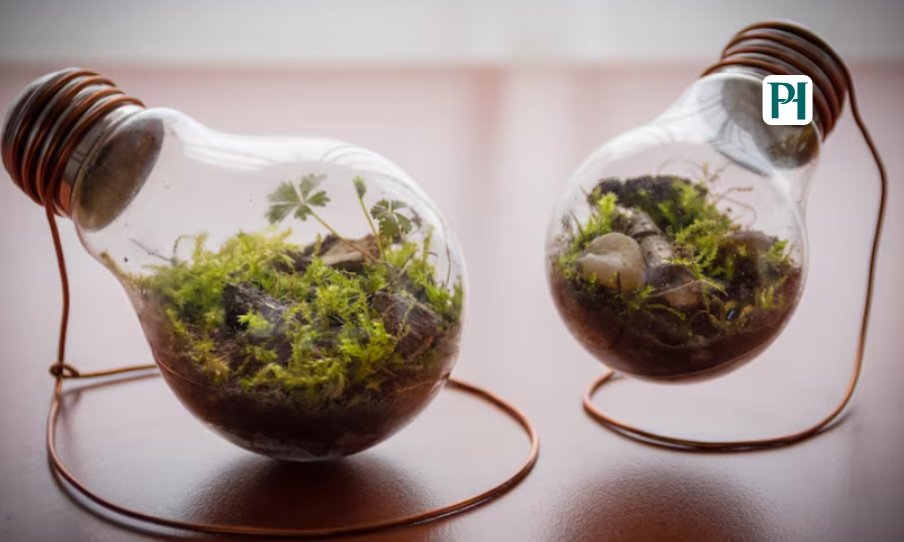
The concept of ecological thinking has transitioned from a niche academic pursuit to the very foundation of how we must perceive our existence on Earth. At its core, this mindset shifts our perspective from seeing nature as a collection of isolated resources to understanding it as a complex, interconnected web of relationships where every action has a ripple effect. As we navigate the complexities of the twenty-first century, the future of ecological thinking in global sustainability depends entirely on our ability to move away from linear, exploitative models and toward systems that mimic the circularity and resilience of natural ecosystems. This evolution is not merely an environmental necessity but a fundamental restructuring of our economic, social, and technological frameworks to ensure long-term survival.
The Shift from Linear Consumption to Systems Integration
Traditional industrial approaches have long been defined by a “take-make-waste” philosophy that ignores the finite boundaries of our planet. However, the rise of ecological thinking demands a radical departure from this short-sightedness. By adopting a systems-thinking lens, we begin to see that the health of our economy is inextricably linked to the health of our soil, oceans, and atmosphere. This integrated approach is the cornerstone of the future of ecological thinking in global sustainability, as it encourages us to design products and cities that function like forests—generating no waste and providing mutual benefits to all inhabitants. When we apply ecological thinking to urban planning, for instance, we stop seeing a building as a static object and start seeing it as a dynamic participant in the local water and energy cycles. This perspective is vital because the future of ecological thinking in global sustainability requires us to acknowledge that humans are not masters of the environment but rather integral components of a larger living system.
Redefining Economic Value Through Natural Capital
For decades, global progress has been measured by Gross Domestic Product, a metric that often rises even as natural habitats are destroyed. The integration of ecological thinking into the financial sector is beginning to challenge this outdated mode of accounting. By assigning value to “ecosystem services”—such as pollination, carbon sequestration, and water purification—we can finally align our market incentives with the needs of the planet. The future of ecological thinking in global sustainability lies in the mainstreaming of regenerative economics, where the primary goal is not just to sustain current levels of resources but to actively restore what has been lost. As businesses adopt ecological thinking, they move beyond simple corporate social responsibility and toward deep-seated sustainability that prioritizes biodiversity as a key asset. The future of ecological thinking in global sustainability will be defined by our success in creating a world where financial prosperity is a byproduct of ecological restoration rather than a cause of its decline.
Technological Innovation Guided by Biological Principles
As we look toward the horizon, the marriage of technology and biology offers one of the most promising paths forward. Through ecological thinking, we are learning to look at nature not as something to be conquered, but as a mentor for design. Biomimicry—the practice of emulating nature’s patterns and strategies—is a direct result of applying ecological thinking to engineering and chemistry. Whether it is creating non-toxic adhesives based on gecko feet or designing wind turbines inspired by the fins of whales, these innovations represent the future of ecological thinking in global sustainability. By using the natural world as a blueprint, we can develop technologies that are inherently sustainable, low-energy, and biodegradable. The future of ecological thinking in global sustainability will likely see the rise of “living” technologies, such as carbon-capturing concrete or bioluminescent streetlights, which reduce our reliance on extractive industries. This synergy between human ingenuity and natural wisdom is the ultimate expression of ecological thinking in the modern age.
Cultivating a Global Consciousness for Long Term Resilience
Perhaps the most significant challenge we face is the transformation of our collective mindset. Promoting ecological thinking requires an educational shift that begins in childhood, fostering a sense of wonder and responsibility toward the natural world. This cultural shift is the invisible engine driving the future of ecological thinking in global sustainability. When communities embrace ecological thinking, they become more resilient to the shocks of climate change because they understand how to work with natural buffers like mangroves and wetlands instead of against them. The future of ecological thinking in global sustainability is also deeply tied to social justice, recognizing that the most vulnerable populations often bear the brunt of ecological mismanagement. By centering ecological thinking in our policy-making, we ensure that sustainability is not a luxury for the few but a foundational right for all. Ultimately, the path toward a balanced future is paved with the realization that our destiny is woven into the fabric of the Earth itself.